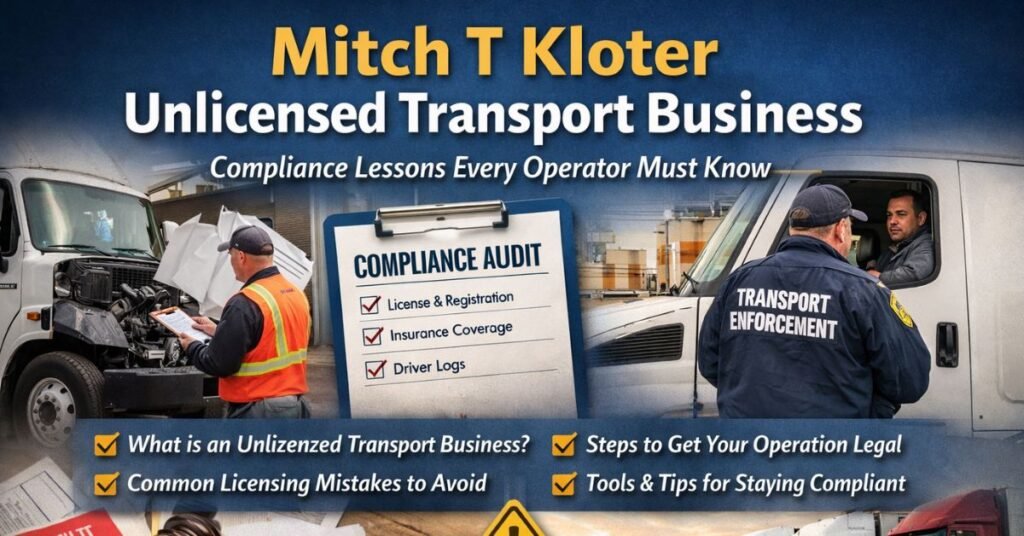
The phrase mitch t kloter unlicensed transport business doesn’t just raise eyebrows—it raises real questions. Questions about safety. About legality. About accountability. And ultimately, about how everyday people can unknowingly end up relying on transport services that operate outside the law.
If you’ve landed here, chances are you’re not casually browsing. Maybe you heard the name Mitch T Kloter in a discussion, saw it referenced in an online forum, or came across concerns tied to an unlicensed transport operation. Or maybe you’re a business owner, regulator, journalist, or consumer who wants to understand what unlicensed transport businesses really are—and why they matter more than most people realize.
This article is not about rumor or sensationalism. It’s about context, compliance, consumer awareness, and hard-earned lessons from the transport industry. By the end, you’ll understand how unlicensed transport businesses operate, why cases like this draw attention, the risks involved, and how to spot red flags before they cost you money—or worse.
Understanding the Concept Behind an Unlicensed Transport Business
To understand the discussion around mitch t kloter unlicensed transport business, we need to start with something deceptively simple: what does “unlicensed transport” actually mean?
In most countries and regions, any business that transports goods or people for compensation must hold specific licenses or permits. These may include:
- Commercial vehicle registrations
- Operating authority from transport regulators
- Insurance coverage specific to commercial transport
- Driver certifications and safety compliance
- Tax and business registrations
An unlicensed transport business is one that offers or performs transportation services without meeting one or more of these legal requirements.
Think of it like an uninspected restaurant kitchen. The food might look fine. The staff might seem professional. But behind the scenes, there’s no guarantee of safety, accountability, or legal protection.
In discussions referencing Mitch T Kloter, the concern often centers on whether transport services were offered without proper regulatory approval. That distinction matters. Operating without a license isn’t a paperwork issue—it’s a structural risk.
When transport businesses bypass licensing:
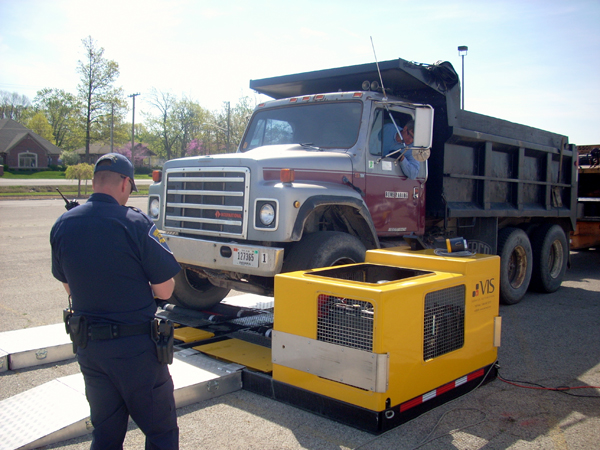
- Vehicles may not be inspected
- Insurance may be invalid
- Drivers may lack qualifications
- Customers have little legal recourse
This is why regulators treat unlicensed transport seriously—and why consumers should too.
Why the Mitch T Kloter Unlicensed Transport Business Topic Draws Attention
People don’t usually search a full name unless there’s a reason. In cases like mitch t kloter unlicensed transport business, interest typically spikes because of public complaints, regulatory scrutiny, or investigative discussions.
From an industry perspective, this kind of attention often highlights broader systemic issues:
- Gaps in enforcement
- Consumer misunderstanding of licensing
- Ease of setting up informal transport operations
- Difficulty tracking cross-jurisdiction services
Transport is a trust-based service. When you hand over goods, cargo, or your own safety to a driver or company, you assume compliance. When that assumption is broken, consequences ripple outward.
Even when no wrongdoing is proven, the absence of licensing itself raises valid concerns:
- Were customers informed?
- Was insurance active?
- Were safety standards enforced?
- Was the business accountable to regulators?
These questions explain why the keyword keeps surfacing—and why understanding the regulatory framework matters more than focusing on personalities.
How Unlicensed Transport Businesses Typically Operate
Unlicensed transport businesses rarely look shady at first glance. In fact, many appear remarkably legitimate.
Based on industry patterns, here’s how they usually operate:
First, they offer lower prices. Without licensing fees, inspections, or compliance costs, unlicensed operators can undercut legitimate businesses. For cost-sensitive customers, this can be tempting.
Second, they rely heavily on informal marketing:
- Social media posts
- Word-of-mouth referrals
- Online classifieds
- Messaging apps
Third, they frame services carefully. Instead of saying “commercial transport,” they might say:
- “Helping with deliveries”
- “Private hauling”
- “Personal transport assistance”
This language is not accidental. It’s designed to blur legal lines.
In discussions involving Mitch T Kloter, similar operational patterns are often cited—again, not as legal conclusions, but as structural characteristics common to unlicensed transport setups.
Real-World Risks of Using an Unlicensed Transport Business
This is where theory meets reality.
If you hire or rely on an unlicensed transport business, the risks are not abstract. They’re practical, immediate, and often expensive.
Safety Risks
Vehicles may not undergo required inspections. Brakes, tires, load restraints—things you never see—may be compromised.
Insurance Gaps
If an accident happens, commercial insurance may be invalid or nonexistent. That means:
- No compensation for damaged goods
- No coverage for injuries
- Personal liability disputes
Legal Exposure
In some jurisdictions, knowingly hiring an unlicensed operator can expose customers to penalties, especially businesses.
No Accountability
Licensed operators answer to regulators. Unlicensed ones often disappear when things go wrong.
These risks explain why regulators, journalists, and consumers pay attention when a name becomes associated with an unlicensed transport business.
Who Is Most Affected by Unlicensed Transport Operations
The impact of unlicensed transport doesn’t fall evenly. Certain groups are hit harder than others.
Small businesses are often the first victims. They hire transport help to save money, unaware of compliance issues. When something goes wrong, they lack legal protection.
Individual consumers are another high-risk group. Moving furniture, shipping equipment, or booking long-distance transport feels informal—but the stakes are high.
Legitimate transport operators are affected too. They invest in licensing, insurance, and compliance, only to lose work to cheaper, unregulated competitors.
And finally, public safety suffers. Roads don’t distinguish between licensed and unlicensed vehicles—everyone shares the risk.
Understanding this ecosystem helps explain why conversations around mitch t kloter unlicensed transport business resonate beyond one individual.
Step-by-Step: How to Verify Whether a Transport Business Is Licensed
If there’s one section to bookmark, it’s this one.
Here’s a practical, no-nonsense process to verify transport licensing:
Start by asking directly. A legitimate operator will willingly provide license numbers, registration details, and proof of insurance.
Next, check government databases. Most transport authorities offer online license lookup tools. A missing record is a red flag.
Verify insurance certificates. Look for commercial coverage, not personal auto insurance.
Confirm vehicle markings. Licensed operators often display registration numbers or authority identifiers.
Ask about compliance. A professional operator can explain inspections, safety protocols, and driver qualifications.
If something feels vague, rushed, or evasive—walk away.
This process applies universally, regardless of whether the name involved is Mitch T Kloter or anyone else.
Tools and Resources to Check Transport Legitimacy
Consumers today have more tools than ever—if they know where to look.
Free resources include:
- Government transport authority websites
- Business registration databases
- Online court record portals
- Consumer protection agencies
Paid tools can add depth:
- Background check platforms
- Commercial compliance databases
- Industry verification services
Free tools are ideal for quick checks. Paid tools are better for businesses making repeat or high-value transport decisions.
The key is consistency. Make verification a habit, not an afterthought.
Common Mistakes People Make—and How to Avoid Them
One of the biggest mistakes is assuming “no complaints” equals legitimacy. Silence doesn’t mean compliance.
Another is trusting verbal assurances. Licensing is documented. If there’s no paper trail, there’s a problem.
People also confuse personal transport with commercial transport. The moment money changes hands, licensing usually applies.
Finally, many ignore gut instinct. If something feels off, it probably is.
Avoiding these mistakes doesn’t require legal expertise—just awareness and discipline.
Lessons the Transport Industry Keeps Relearning
The ongoing interest in mitch t kloter unlicensed transport business reflects a recurring industry lesson: regulation exists for a reason.
Licensing protects consumers. It protects workers. It protects infrastructure. And it protects legitimate businesses from unfair competition.
Every time an unlicensed operation surfaces, it reinforces the same truth: shortcuts in transport don’t stay cheap for long.
Conclusion: What You Should Take Away From This Discussion
This article isn’t about judgment. It’s about understanding.
The keyword mitch t kloter unlicensed transport business represents a broader issue that affects consumers, businesses, and public safety alike. Whether the discussion involves one individual or many, the lesson remains the same: verify before you trust.
Transport isn’t just movement—it’s responsibility on wheels.
If this guide helped clarify things, consider sharing it, bookmarking it, or using it as a checklist next time you hire transport services.
FAQs
What does “unlicensed transport business” mean?
It refers to offering transport services without required legal permits, insurance, or regulatory approval.
Is using an unlicensed transport service illegal?
It can be, depending on jurisdiction and whether the customer knowingly engaged the service.
Why do unlicensed transport businesses exist?
Lower costs, weak enforcement, and consumer unawareness all contribute.
How can I check if a transport operator is licensed?
Ask for documentation and verify through official government databases.
Does cheaper transport usually mean unlicensed?
Not always, but significantly below-market pricing is a common red flag.

Michael Grant is a business writer with professional experience in small-business consulting and online entrepreneurship. Over the past decade, he has helped brands improve their digital strategy, customer engagement, and revenue planning. Michael simplifies business concepts and gives readers practical insights they can use immediately.