
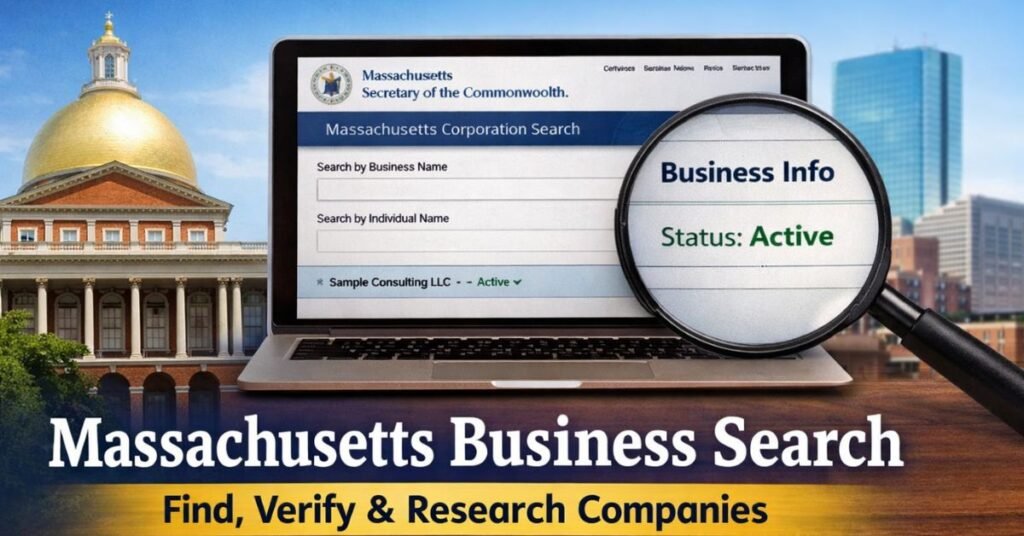
Introduction
If you’ve ever tried to start a business in Massachusetts, verify a company before signing a contract, or simply check whether a business name is available, you’ve probably run into the same question: “How do I run a proper Massachusetts business search—and know I’m doing it right?”
This isn’t just a bureaucratic checkbox. A Massachusetts business search can save you from expensive mistakes, legal headaches, and wasted time. It’s how entrepreneurs avoid naming conflicts, how investors confirm legitimacy, how freelancers vet clients, and how buyers verify who they’re actually dealing with.
Massachusetts has one of the most structured and transparent business registry systems in the U.S., but it can feel overwhelming at first. Between corporate filings, assumed business names, entity statuses, and multiple search filters, it’s easy to click around without really understanding what you’re looking at.
In this guide, we’ll slow everything down and make it practical. You’ll learn what a Massachusetts business search actually is, why it matters, how to do it step by step, which tools work best, common mistakes people make (and how to avoid them), and how to use the information you find in real-world scenarios. By the end, you’ll be able to search like someone who’s done this dozens of times—because that’s exactly the mindset this article is written from.
What Is a Massachusetts Business Search?
At its core, a Massachusetts business search is the process of looking up registered business entities in the state’s official database. This database is maintained by the Massachusetts Secretary of the Commonwealth and contains records for nearly every legally registered business operating in the state.
Think of it like a public ledger for companies. Just as you’d check property records before buying a house, you check the business registry before committing to a name, partnership, or transaction. The database includes corporations, LLCs, LLPs, nonprofits, professional associations, and foreign entities authorized to do business in Massachusetts.
When you run a Massachusetts business search, you can typically find:
- Legal business name and any alternate names
- Entity type (LLC, corporation, nonprofit, etc.)
- Date of formation or registration
- Current status (active, dissolved, inactive)
- Registered agent information
- Business address
- Filing history and annual reports
A helpful analogy: imagine the registry as a DMV for businesses. Just as every legally driven car must be registered, every legitimate business must exist somewhere in this system. If it’s not there—or if the status is inactive—that’s a signal worth paying attention to.
Importantly, this search isn’t just for business owners. It’s for anyone who needs clarity before making a decision involving money, trust, or legal responsibility.
Why Massachusetts Business Search Matters (More Than You Think)
People often underestimate how powerful a simple business search can be. They assume it’s only relevant during business formation. In reality, it plays a role across the entire business lifecycle—and beyond.
For entrepreneurs, the Massachusetts business search is your first line of defense against naming conflicts. Registering a business name that’s already in use can lead to forced name changes, trademark disputes, or outright rejection by the state. A five-minute search can save months of rebranding later.
For freelancers and contractors, it’s a credibility check. Before accepting a long-term client or high-value contract, verifying that the company is active and properly registered adds a layer of protection. It helps you avoid ghost companies and shell entities.
For investors and lenders, the registry confirms legitimacy. An entity’s filing history, longevity, and compliance record can indicate how seriously it treats governance and legal obligations.
For consumers, it’s about trust. If you’re hiring a contractor, buying from a new company, or entering into a service agreement, a business search helps confirm that the entity exists and operates legally in Massachusetts.
In short, the Massachusetts business search is less about paperwork and more about informed decision-making. It’s how you turn assumptions into facts.
Who Should Use a Massachusetts Business Search?
Almost everyone interacting with businesses in Massachusetts benefits from using this tool, but the use cases differ depending on your role.
New business owners use it to check name availability and research competitors. You can see how similar companies structure themselves, what entity types they choose, and how long they’ve been operating.
Existing business owners use it to monitor their own status. Annual reports, amendments, and compliance updates all reflect here. Catching an error early can prevent administrative dissolution.
Job seekers sometimes use it to verify employers. If a company claims to be established but has no registry record, that’s a red flag.
Legal professionals and accountants rely on it daily. It’s a foundational research tool for contracts, compliance checks, and due diligence.
Even journalists and researchers use Massachusetts business search data to trace ownership, investigate patterns, or confirm corporate relationships.
The common thread? Anyone who values clarity, transparency, and accuracy.
Step-by-Step: How to Perform a Massachusetts Business Search

Let’s walk through the actual process, step by step, so you’re not guessing or clicking randomly.
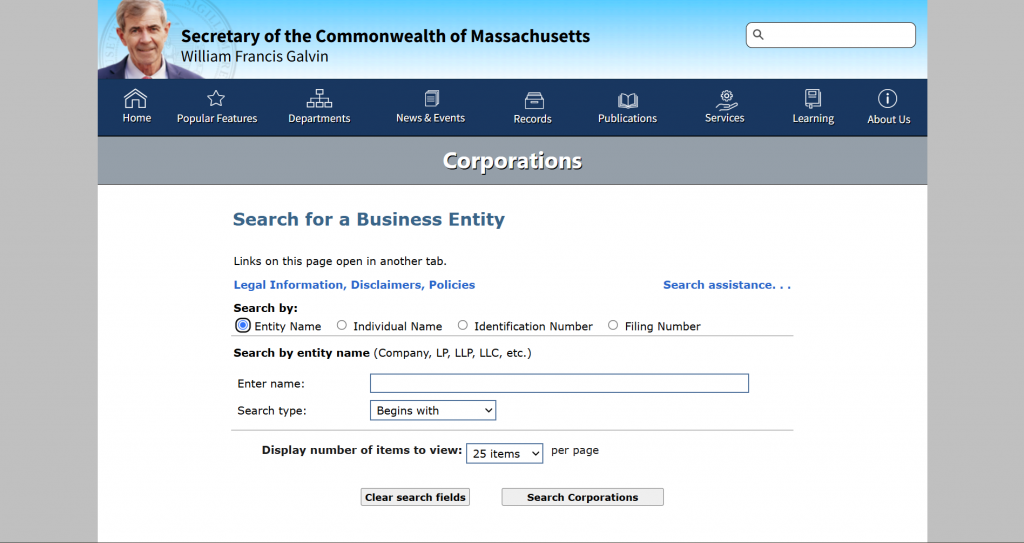
First, go to the official business search portal provided by the Massachusetts Secretary of the Commonwealth. This is the authoritative source. Third-party sites can be useful, but they should never replace the official registry.
Once you’re on the search page, you’ll see several search options. The most common is by business name. Start by entering the full name if you have it. If you’re not sure of the exact spelling, use partial keywords. The system is flexible and often returns close matches.
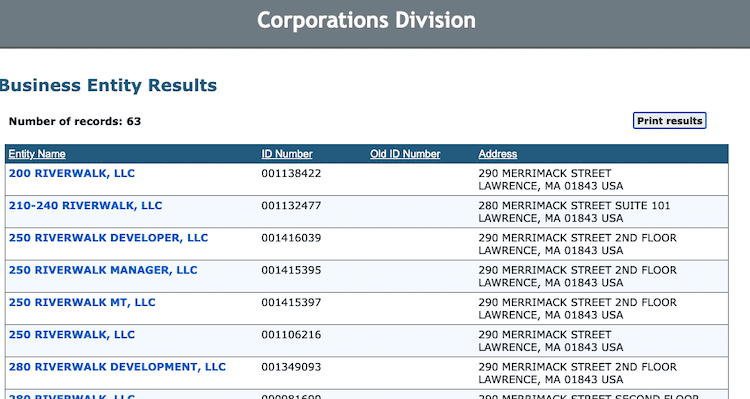
After submitting your search, you’ll see a list of results. This is where people rush—and where mistakes happen. Click into each result that looks relevant. Pay attention to:
- Entity status (active is what you usually want)
- Entity type
- Date of formation
- City or address
Clicking into a specific record opens the full profile. Here you can review filing history, see the registered agent, and confirm whether the business is in good standing.
If you’re checking name availability, don’t just look for exact matches. Look for similar names, alternate spellings, and plural variations. Massachusetts, like most states, restricts names that are “confusingly similar.”
Finally, if you’re researching for due diligence, download or review the filing documents. These PDFs can reveal ownership changes, address updates, and compliance patterns over time.
Best Practices for Accurate Search Results
Running a Massachusetts business search is simple, but running a good one takes a bit of strategy.
Start broad, then narrow down. Use partial names before exact phrases. This helps you catch similar entities you might otherwise miss.
Always check the status. An inactive or dissolved entity may still appear in search results, but it’s not legally operating.
Look at dates. A business formed last month carries different implications than one operating for 15 years.
Verify registered agent details. Reputable businesses usually keep this information current.
Cross-reference when necessary. If something feels off, compare the registry data with the company’s website, LinkedIn page, or other public records.
Think of this like investigative work, not a single search box. The quality of your conclusions depends on how thoroughly you review the details.
Tools, Platforms, and Alternatives

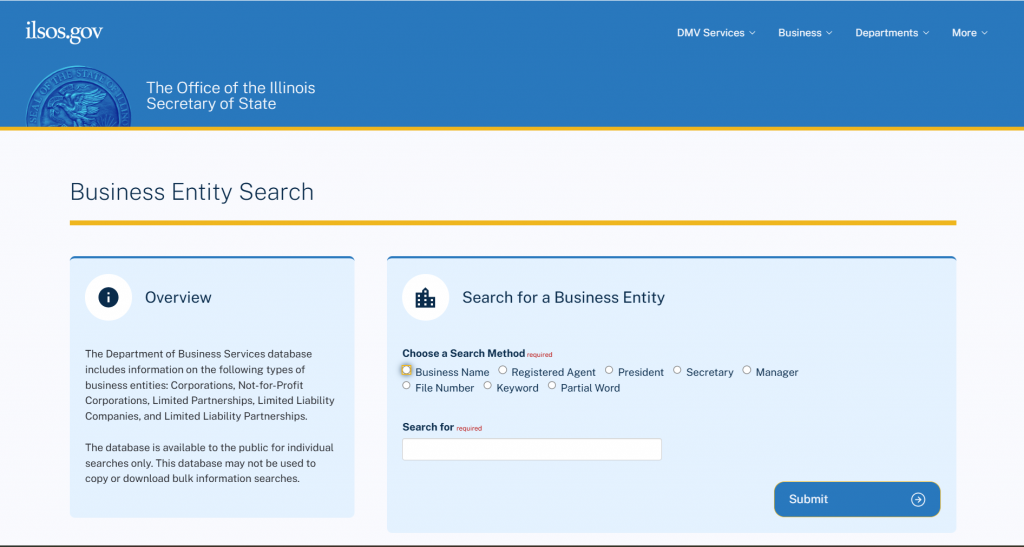
The official Massachusetts business search portal should always be your starting point, but it’s not the only tool worth knowing.
Free tools include the state registry itself and basic Google searches to confirm brand presence. These are usually sufficient for name checks and basic verification.
Paid tools, such as business intelligence platforms, aggregate data across states and add layers like risk scoring, ownership mapping, and historical comparisons. These are useful for investors, legal teams, and larger transactions.
The key difference is depth versus authority. Third-party tools add convenience and analysis, but the Massachusetts Secretary of the Commonwealth database remains the legal source of truth.
A smart approach is to use both. Start with the official registry, then supplement with additional tools if your situation calls for deeper insight.
Common Mistakes (and How to Avoid Them)
One of the most common mistakes is assuming that a name is available just because you don’t see an exact match. Similar names can still cause rejection.
Another frequent error is ignoring entity status. People often overlook the difference between active, dissolved, and inactive, leading to incorrect assumptions.
Some users rely entirely on third-party websites without verifying information against the official registry. This can lead to outdated or incomplete data.
Others stop at the first result instead of reviewing multiple entries, especially when names are common.
The fix is simple: slow down. Treat the search as research, not a checkbox. Verify, cross-check, and read beyond the headline details.
Real-World Scenarios and Use Cases
Imagine you’re launching a consulting firm and have fallen in love with a name. A Massachusetts business search reveals a similarly named LLC formed eight years ago and still active. You pivot early, saving thousands in branding costs.
Or you’re about to sign a contract with a supplier. A quick search shows their entity was administratively dissolved last year. That changes the conversation—and possibly the deal.
These are everyday examples, but they highlight how powerful this tool is when used intentionally.
Conclusion
A Massachusetts business search isn’t just a formality—it’s a practical skill. Whether you’re starting something new, verifying an opportunity, or protecting yourself from risk, knowing how to search properly gives you clarity and confidence.
Once you understand how the system works, it stops feeling like red tape and starts feeling like a powerful resource. Take your time, use the official tools, and treat the information with the respect it deserves.
If you’ve never run a search before, try one today. And if you have, revisit it with a more intentional eye. You’ll be surprised how much insight is sitting in plain sight.
FAQs
What is the official Massachusetts business search website?
It’s maintained by the Massachusetts Secretary of the Commonwealth and provides the most accurate records.
Is a Massachusetts business search free?
Yes, searching the registry is free. Some document downloads may have small fees.
Can I check if a business name is available in Massachusetts?
Yes. The search tool helps identify existing and similar names, which is essential before registration.
How often is the database updated?
Updates occur as filings are processed, often within days of submission.
Does the search include sole proprietorships?
Only if they have registered an assumed business name with the state.

Michael Grant is a business writer with professional experience in small-business consulting and online entrepreneurship. Over the past decade, he has helped brands improve their digital strategy, customer engagement, and revenue planning. Michael simplifies business concepts and gives readers practical insights they can use immediately.