
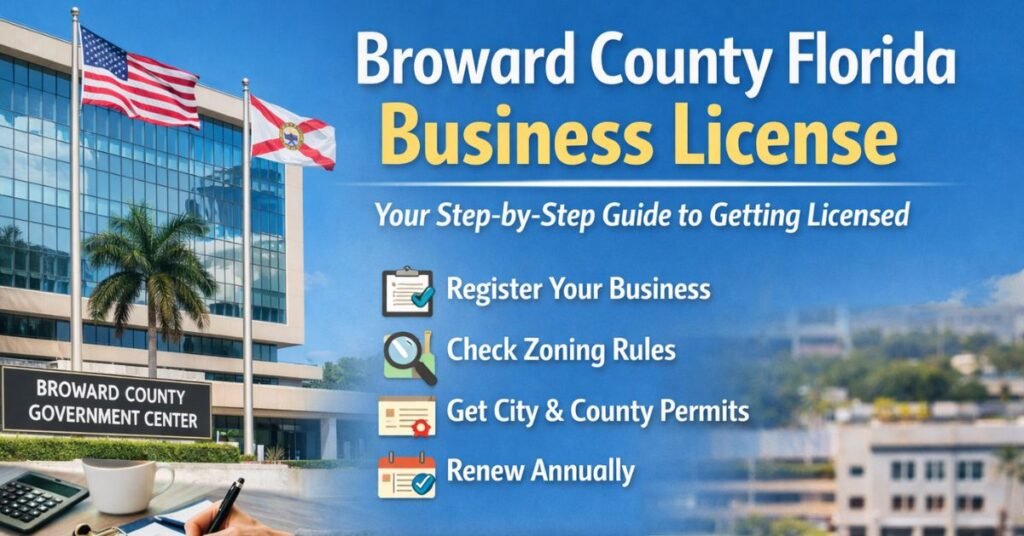
Starting a business is exciting. It’s the moment where an idea leaves your notebook and steps into the real world. But before the first customer walks through your door—or clicks “buy now”—there’s one practical step you simply can’t ignore: getting your broward county florida business license.
If paperwork makes your eyes glaze over, you’re not alone. Many entrepreneurs feel overwhelmed by permits, registrations, and local rules that seem written in another language. The good news? Once you understand the process, it’s far less complicated than it sounds. In fact, securing the right license is one of the smartest moves you can make to protect your business, build trust, and avoid costly legal headaches.
This guide walks you through everything in plain English. You’ll learn what a Broward County business license really is, who needs one, how to apply step by step, common mistakes to avoid, and insider tips that seasoned business owners wish they’d known earlier. By the end, you’ll feel confident, prepared, and ready to move forward the right way.
Understanding what a Broward County Florida business license actually means

Let’s clear up the biggest misconception first. In Broward County, what most people call a “business license” is officially known as a Local Business Tax Receipt (LBTR). Think of it less like a test you must pass and more like a registration that tells the county: “Yes, this business exists, and it’s operating legally here.”
This distinction matters because many new entrepreneurs spend hours searching for the wrong document. They imagine a complicated approval process similar to professional licensing for doctors or contractors. In reality, the Broward County business license is primarily about:
- Registering your business location
- Paying a local business tax
- Complying with zoning and municipal rules
- Keeping public records accurate
A helpful analogy is vehicle registration. Owning a car isn’t illegal—but driving without registration is. Likewise, running a business isn’t automatically restricted, yet operating without the proper local registration can trigger fines, closures, or delays.
Another important detail: you often need two approvals.
- A business tax receipt from your city (like Fort Lauderdale, Hollywood, or Pembroke Pines).
- A business tax receipt from Broward County itself.
This two-layer system surprises many first-time owners, but once you know it exists, the process becomes straightforward.
Why getting licensed in Broward County matters more than you think
Some entrepreneurs quietly wonder: “Do I really need this right away?”
It’s a fair question—especially when you’re focused on sales, marketing, and survival.
But skipping your Broward County Florida business license can create problems that snowball quickly.
First, there’s legal protection. Operating without registration can lead to code violations, fines, or even forced closure. Fixing those issues later usually costs far more than doing it correctly from day one.
Second, there’s credibility. Customers, landlords, banks, and vendors often verify whether a business is properly registered. Having your local business tax receipt signals professionalism and trustworthiness.
Third, there’s financial access. Many grants, loans, and merchant accounts require proof of legal operation. Without licensing, opportunities quietly disappear before you even know they existed.
Finally, there’s peace of mind. When your paperwork is handled, you can focus on growth instead of worrying about compliance surprises.
In short, licensing isn’t just bureaucracy—it’s a foundation for long-term success.
Who needs a Broward County business license and who doesn’t
Almost every revenue-generating activity in Broward County requires a local business tax receipt. That includes:
- Home-based businesses
- Online sellers operating from a local address
- Freelancers and consultants
- Retail stores and restaurants
- Contractors and service providers
- Short-term rental operators
Many people assume online businesses are exempt. They’re usually not. If you’re running the business from within Broward County, local registration is typically required even if customers live elsewhere.
There are a few limited exceptions. Certain nonprofits, government entities, and specific regulated professions may follow different rules. But for most entrepreneurs, the safest assumption is simple:
If you’re earning money locally, you likely need a Broward County business license.
When in doubt, contacting the county’s business tax office directly is always the smartest move.
The real benefits of registering your business properly
Licensing can feel like a chore—until you see what it unlocks.
One of the biggest advantages is legitimacy. Customers naturally trust businesses that operate transparently. A registered business feels safer, more permanent, and more professional.
Another benefit is growth readiness. When you’re licensed:
- Opening business bank accounts is easier
- Hiring employees becomes smoother
- Signing leases feels less risky to landlords
- Applying for insurance and financing is faster
There’s also tax clarity. Proper registration keeps your records organized, which reduces stress during tax season and lowers the chance of penalties.
Perhaps most importantly, licensing gives you confidence. Instead of wondering whether you missed something, you know your foundation is solid.
That confidence often translates directly into better decisions, stronger branding, and faster growth.
Step-by-step: how to get a Broward County Florida business license
Here’s where things become practical. Let’s walk through the real-world process in the exact order most successful applicants follow.
Step 1: Register your business entity with the state
Before dealing with the county, you typically need a legal business structure registered with Florida. Common options include:
- Sole proprietorship
- LLC
- Corporation
- Partnership
Most small businesses choose an LLC because it balances simplicity with liability protection.
Once registered, you’ll receive official state documentation—something the county will ask for later.
Step 2: Obtain a federal EIN if needed
If you plan to hire employees, open certain bank accounts, or operate as an LLC or corporation, you’ll likely need an Employer Identification Number (EIN) from the IRS.
This step is free and quick, but skipping it can delay everything else.
Step 3: Check zoning approval with your city
This is where many applications stall.
Your city must confirm that your business type is allowed at your location. For example:
- Home-based offices may be permitted with restrictions
- Restaurants require commercial zoning
- Certain services need special approvals
Getting zoning clearance early prevents frustrating surprises later.
Step 4: Apply for your city business tax receipt
In Broward County, cities usually come first.
You’ll submit:
- Business registration documents
- Identification
- Address verification
- Applicable fees
Once approved, you receive your city local business tax receipt.
Step 5: Apply for the Broward County business tax receipt
Now you’re ready for the county level.
You’ll provide:
- Your city receipt
- State registration documents
- EIN (if applicable)
- Application form and payment
After processing, you’ll receive your official Broward County Florida business license.
Step 6: Renew annually
This isn’t a one-time task. Business tax receipts must be renewed each year, typically by September 30.
Missing renewal deadlines can result in penalties or suspension, so calendar reminders are essential.
Helpful tools, services, and expert shortcuts
While you can complete everything yourself, many entrepreneurs use tools or services to simplify the process.
DIY online filing works well if:
- Your business is straightforward
- You’re comfortable with paperwork
- You want to save money
Professional services help when:
- You’re unsure about zoning or licensing
- You want faster processing
- Your business has multiple permits
Free resources include:
- County and city websites
- Small Business Development Centers
- Local chambers of commerce
Paid options include:
- Business formation companies
- Licensing consultants
- Attorneys for complex cases
The best choice depends on your budget, timeline, and comfort level.
Common mistakes entrepreneurs make (and how to avoid them)
Even smart, motivated business owners make preventable errors during licensing.
One frequent mistake is applying in the wrong order.
Remember: city first, county second.
Another is ignoring zoning rules.
Always confirm your business type is allowed at your address before paying fees.
Some owners also forget annual renewal, which can quietly invalidate their license.
Others assume online businesses don’t count, leading to compliance issues later.
The fix is simple: slow down, verify each step, and keep organized records.
A single checklist can save weeks of frustration.
Real-world scenarios: how licensing plays out for different businesses
Consider a freelance graphic designer working from home in Fort Lauderdale.
Even without employees or a storefront, they still need:
- State registration (often optional but recommended)
- City business tax receipt
- Broward County business tax receipt
Now imagine a restaurant opening in Hollywood, Florida.
Their requirements expand to include:
- Health department permits
- Food safety inspections
- Fire approvals
- Signage permits
- Multiple tax registrations
Both businesses need licensing—but the complexity differs dramatically.
Understanding your specific category is key to staying compliant without overpaying for unnecessary permits.
Long-term compliance and staying in good standing
Getting licensed is only the beginning. Successful business owners treat compliance as an ongoing habit rather than a one-time chore.
Key practices include:
- Renewing licenses before deadlines
- Updating addresses after moving
- Reporting ownership changes
- Maintaining insurance where required
- Keeping copies of all approvals
These small administrative habits protect your business from interruptions that can damage revenue and reputation.
Conclusion: building your business on a solid legal foundation
Securing your broward county florida business license might not feel glamorous, but it’s one of the most powerful steps you can take as an entrepreneur.
It transforms your idea into a recognized, legitimate operation.
It protects you from fines and shutdowns.
It opens doors to banking, funding, partnerships, and long-term growth.
Most importantly, it gives you confidence—the quiet certainty that your business is built the right way from the very beginning.
If you’re just starting out, take the first step today.
And if you’re already operating, double-check your compliance.
Future you will be grateful you did.
FAQs
Do I need a Broward County business license for an online business?
Yes, if the business operates from a physical address within Broward County, a local business tax receipt is usually required.
How much does a Broward County business license cost?
Fees vary by business type and location but are generally affordable, often ranging from modest annual amounts upward depending on classification.
Can I apply online?
Many cities and the county offer online applications, though some situations still require in-person or mailed documents.
What happens if I don’t renew on time?
Late penalties, additional fees, or suspension of your ability to operate legally may occur.
Do home-based businesses need licensing?
Yes, most home-based businesses still require both city and county business tax receipts.

Michael Grant is a business writer with professional experience in small-business consulting and online entrepreneurship. Over the past decade, he has helped brands improve their digital strategy, customer engagement, and revenue planning. Michael simplifies business concepts and gives readers practical insights they can use immediately.