

When we think about major medical breakthroughs—from vaccines that stop pandemics to treatments that turn fatal diseases into manageable conditions—we often forget the engine behind these discoveries. The Institute of National Health represents the pinnacle of biomedical research and public health stewardship. Whether funded by government initiatives or operating as independent research bodies, institutes dedicated to national health are the bedrock upon which modern medicine stands. They provide the funding, the framework, and the focus necessary to tackle humanity’s most pressing health challenges.
In this comprehensive guide, we will explore what a national health institute typically does, using the U.S. National Institutes of Health (NIH) as a primary example of this model, while also discussing the broader concept of national health organizations globally. We will delve into their history, their critical role in disease prevention, and how their work directly impacts your daily life. From funding innovative clinical trials to setting guidelines for public safety, these institutions are the unsung heroes of our healthcare system.
What is an Institute of National Health?
The term “Institute of National Health” often refers to a country’s primary agency responsible for biomedical and public health research. These organizations are usually government-funded but operate with a high degree of scientific independence. Their primary mission is to seek fundamental knowledge about the nature and behavior of living systems and the application of that knowledge to enhance health, lengthen life, and reduce illness and disability.
While the specific names vary by country—such as the NIH in the United States, the National Institute for Health and Care Research (NIHR) in the UK, or the Inserm in France—their core functions remain strikingly similar.
The Three Pillars of a Health Institute
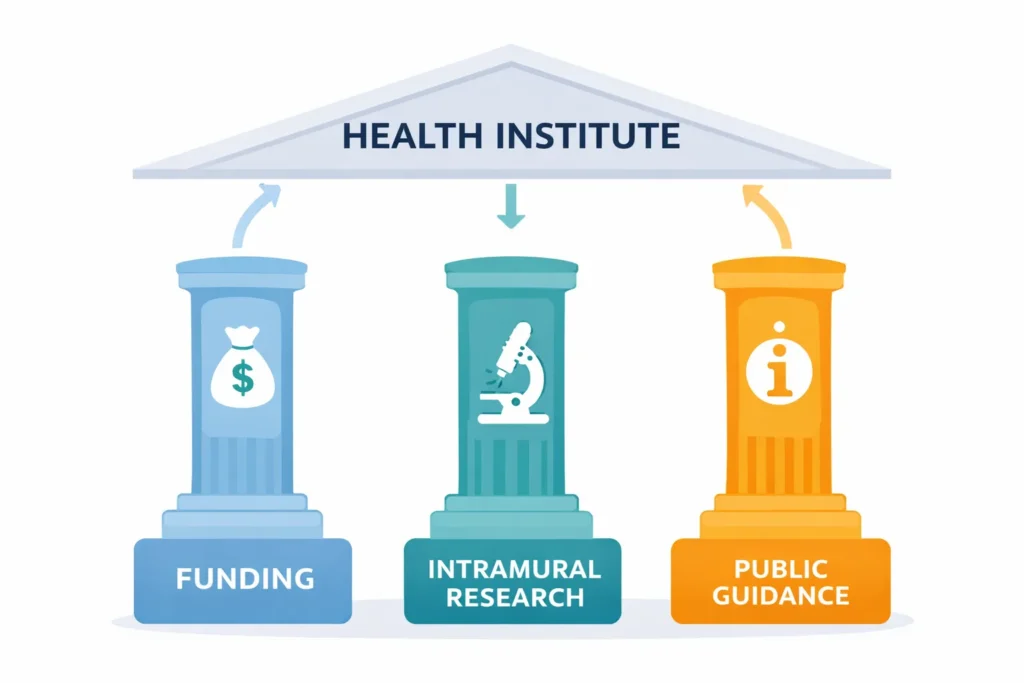
Most national health institutes operate on three main pillars:
- Research Funding: They are often the largest source of funding for medical research in their respective countries. They provide grants to universities, hospitals, and private research centers.
- Intramural Research: They maintain their own laboratories and employ thousands of scientists who conduct cutting-edge research directly on their campuses.
- Public Health Guidance: They translate complex scientific findings into actionable guidelines for doctors, policymakers, and the general public.
The Global Impact of National Health Institutes
The influence of an Institute of National Health extends far beyond national borders. Diseases do not respect geography, and neither does science. These institutes are key players in the global health ecosystem, collaborating on international projects to fight infectious diseases, malnutrition, and chronic conditions.
Leading the Fight Against Pandemics
During global health crises, such as the COVID-19 pandemic or the HIV/AIDS epidemic, national health institutes take center stage. They coordinate rapid response teams, accelerate vaccine development, and establish treatment protocols.
- Vaccine Development: Much of the foundational technology used in modern vaccines, including mRNA technology, was developed through research funded or conducted by national health institutes.
- Clinical Trials: They oversee massive, multi-country clinical trials to test the safety and efficacy of new drugs. This rigorous testing ensures that treatments are safe before they reach the public.
- Data Sharing: These institutes act as hubs for data, sharing vital genetic sequences and epidemiological data with researchers worldwide to speed up solutions.
Key Areas of Research and Innovation
A national health institute doesn’t just focus on one type of medicine. They are massive, multi-disciplinary organizations that cover every aspect of the human body and mind. Here are some of the critical areas where they drive innovation.
Cancer Research and Treatment
One of the most significant investments for any institute of national health is oncology. The war on cancer is fought in their labs every day.
- Immunotherapy: Research has shifted from just killing cancer cells (chemotherapy) to teaching the body’s own immune system to recognize and attack them (immunotherapy).
- Precision Medicine: Institutes are pioneering the use of genetic profiling to tailor cancer treatments to individual patients. Instead of a one-size-fits-all approach, doctors can now prescribe drugs that target specific genetic mutations in a tumor.
Neuroscience and Brain Health
Understanding the human brain is the final frontier of medicine. Institutes are dedicating billions to mapping the brain and understanding neurodegenerative diseases.
- Alzheimer’s and Dementia: With an aging global population, research into preventing and treating cognitive decline is a top priority.
- Mental Health: There is a growing focus on the biological underpinnings of mental health conditions like depression, anxiety, and schizophrenia, moving away from stigma and toward science-based treatments.
- The BRAIN Initiative: Large-scale projects aim to map every neuron and synapse, hoping to unlock the secrets of consciousness, memory, and learning.
Infectious Diseases and Immunology
While chronic diseases are rising, the threat of infectious disease remains.
- Antimicrobial Resistance: A major focus of current research is the “silent pandemic” of antibiotic-resistant bacteria. Institutes are racing to find new antibiotics and alternative therapies like phage therapy.
- Vector-Borne Diseases: Research into how diseases like Malaria and Dengue are transmitted helps create better prevention strategies, from vaccines to genetically modified mosquitoes.
How Research Funding Works
One of the most important, yet least understood, functions of an Institute of National Health is how it distributes money. This process drives the direction of science for decades.
The Grant Application Process
The process is highly competitive and rigorous.
- Solicitation: The institute identifies a gap in knowledge (e.g., “We need better treatments for pediatric diabetes”) and asks researchers to submit proposals.
- Peer Review: This is the gold standard of science. Panels of independent experts review the proposals. They judge them based on significance, innovation, and the feasibility of the approach.
- Funding Decision: Only the highest-scoring proposals receive funding. In many cases, fewer than 10-20% of applicants succeed, ensuring that only the most promising science moves forward.
Supporting the Next Generation
Institutes don’t just fund projects; they fund people. A significant portion of the budget goes toward training grants. These support PhD candidates, postdoctoral fellows, and early-career scientists, ensuring there is a pipeline of talent ready to tackle the medical challenges of the future.
The Role of Clinical Trials
You cannot discuss an Institute of National Health without discussing clinical trials. These studies are the bridge between a discovery in a petri dish and a cure in a pharmacy.
Phases of Clinical Research
Institutes oversee strict protocols to ensure human safety.
- Phase I: Testing safety in a small group of healthy volunteers.
- Phase II: Testing efficacy in a larger group of patients who have the condition.
- Phase III: Comparing the new treatment against the current standard of care in a massive study involving thousands of people.
- Phase IV: Post-market monitoring to track long-term side effects.
Participant Safety and Ethics
National institutes set the ethical standards for research. They enforce strict rules about “informed consent,” ensuring that participants understand the risks and benefits. They also mandate diversity in trials to ensure that treatments work for people of all genders, races, and ages.
Public Health Education and Resources
An often-overlooked function of these institutes is communication. Science is useless if it stays locked in a lab.
Translating Science for the Public
National health institutes maintain massive databases and websites designed for the layperson. Whether you are looking for information on a rare genetic disorder or tips for heart-healthy eating, their resources are trusted, evidence-based, and free of commercial bias.
Setting Dietary and Activity Guidelines
Ever wonder where the recommendation to “get 150 minutes of exercise a week” comes from? It comes from research analyzed and synthesized by national health institutes. They review decades of studies to provide the public with clear benchmarks for healthy living.
Challenges Facing National Health Institutes
Despite their successes, these organizations face significant hurdles in the 21st century.
Budget Constraints
Science is expensive. As technology advances, the cost of research increases. Securing consistent government funding is a constant battle. Political shifts can lead to budget cuts that stall long-term projects.
The Pace of Technology
Technological advancements like Artificial Intelligence (AI) and CRISPR gene editing are moving faster than regulation. Institutes must race to establish ethical guidelines for these powerful new tools without stifling innovation.
Public Trust in Science
In an era of misinformation, maintaining public trust is harder than ever. Institutes must work tirelessly to communicate transparently, combat pseudoscience, and prove the value of their work to the taxpayers who fund it.
The Future of the Institute of National Health
What does the future hold for these titans of research? The next decade promises a revolution in how we approach health.
The Era of Big Data
Institutes are becoming data science hubs. By analyzing electronic health records from millions of patients, AI can identify patterns that human researchers might miss. This could predict outbreaks before they happen or identify side effects of drugs much earlier.
Personalized Prevention
The future isn’t just treating sickness; it’s predicting it. Through genomic sequencing and biomarker analysis, national health institutes aim to shift the healthcare paradigm from “sick care” to true “healthcare,” focusing on keeping people well based on their unique biological makeup.
Global Collaboration
The challenges of the future—climate change, pandemics, food insecurity—are global. We will likely see increased integration between the national health institutes of different countries, forming a global network of surveillance and response.
Conclusion
The Institute of National Health—whether in the US, Europe, Asia, or elsewhere—is the beating heart of medical progress. It is the invisible hand that guides a novel molecule from a chemist’s bench to a patient’s bedside. It provides the rigorous data that doctors rely on to save lives. It offers hope to families facing difficult diagnoses.
By funding the risk-takers, enforcing the highest ethical standards, and prioritizing the public good over profit, these institutes ensure that science serves humanity. As we face new challenges, from antibiotic resistance to the health impacts of climate change, the robust, independent, and well-funded work of these national institutes will be more critical than ever. Supporting them is not just an investment in science; it is an investment in our collective future.
Frequently Asked Questions (FAQs)
Q1: Is the “Institute of National Health” a specific place?
A1: The term is often used generically to describe a country’s main government health research agency. However, in the United States, the specific agency is the National Institutes of Health (NIH), located in Bethesda, Maryland. Other countries have equivalent bodies with different names but similar functions.
Q2: How is an Institute of National Health funded?
A2: Primarily through taxpayer money appropriated by the national government. For example, in the U.S., Congress approves the annual budget for the NIH. They may also receive funding from private partnerships and philanthropic organizations for specific initiatives.
Q3: Can individuals apply for grants from a national health institute?
A3: Generally, grants are awarded to institutions (like universities, medical schools, or small businesses) rather than individuals. However, the scientist who writes the grant (the Principal Investigator) manages the research. There are specific fellowships and training grants available for students and individual researchers.
Q4: Do these institutes make drugs?
A4: They generally do not manufacture or sell drugs. Instead, they fund the basic research that discovers potential drug targets. Pharmaceutical companies then use this research to develop, manufacture, and market the actual medications. However, the institute often collaborates on the clinical trials necessary for approval.
Q5: How can I participate in a clinical trial funded by a national health institute?
A5: Most national institutes maintain a searchable database of active clinical trials. In the U.S., the website ClinicalTrials.gov allows you to search for studies recruiting patients for specific conditions. Always consult with your doctor before joining a trial.

Sofia Bennett is a fashion writer and style observer known for her clean sense of aesthetics and trend analysis. She has covered fashion shows, reviewed designer collections, and interviewed independent creators. Sofia specializes in connecting fashion with real-life lifestyle choices, helping readers understand what looks good — and why.