
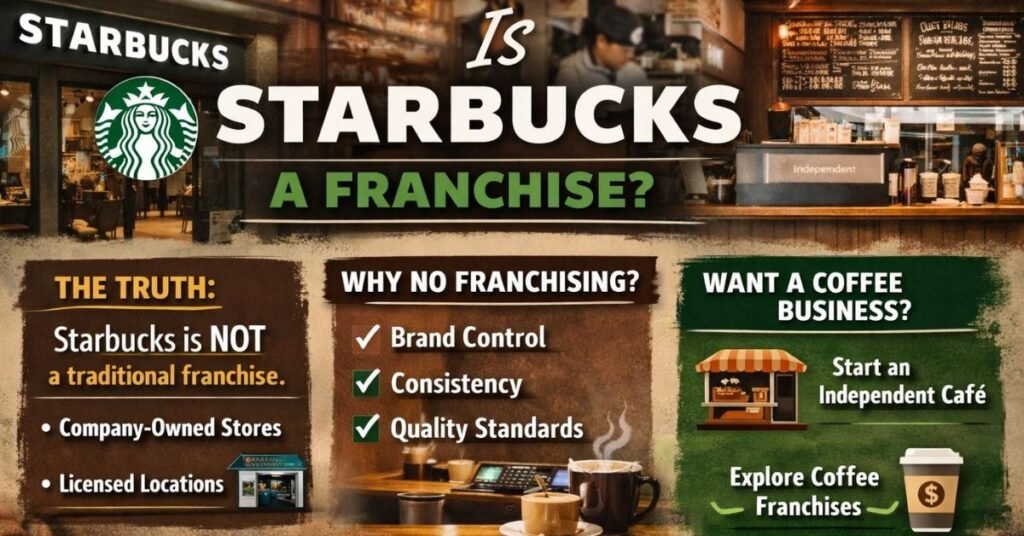
If you’ve ever stood in line at a busy Starbucks, watching a steady stream of customers order lattes like clockwork, you’ve probably had this thought: “I could run one of these.” It looks organized. Predictable. Profitable. So the question naturally follows—is Starbucks a franchise, or is there something else going on behind those familiar green logos?
This is one of the most searched questions in the food and beverage business world, and for good reason. For entrepreneurs, franchises represent a shortcut to brand recognition, systems, and customer trust. Starbucks, meanwhile, is one of the most recognizable brands on Earth. If it were franchised in the traditional sense, it would likely be one of the most competitive franchise opportunities ever created.
But the reality is more nuanced—and far more interesting.
In this in-depth guide, we’re going to unpack exactly how Starbucks operates, why it does not franchise in the traditional way, what alternatives exist, and what this means if you’re serious about owning or operating a coffee business. Whether you’re a first-time entrepreneur, a seasoned investor, or simply curious, you’ll walk away with clarity, context, and practical direction.
Understanding the Question: What Does “Is Starbucks a Franchise” Really Mean?
Before we can give a straight answer, we need to slow down and define the question itself. When most people ask “is Starbucks a franchise,” they’re really asking one of three things:
- Can I buy the rights to open a Starbucks like I would with McDonald’s or Subway?
- Does Starbucks allow individual owners to operate stores under its brand?
- How does Starbucks expand so rapidly if it doesn’t franchise?
These are fair questions, and they stem from how we’ve been conditioned to understand big consumer brands. In fast food especially, franchising is the dominant growth model. Independent owners invest their own capital, follow strict brand guidelines, and pay ongoing royalties in exchange for the brand name and systems.
Starbucks breaks this mold.
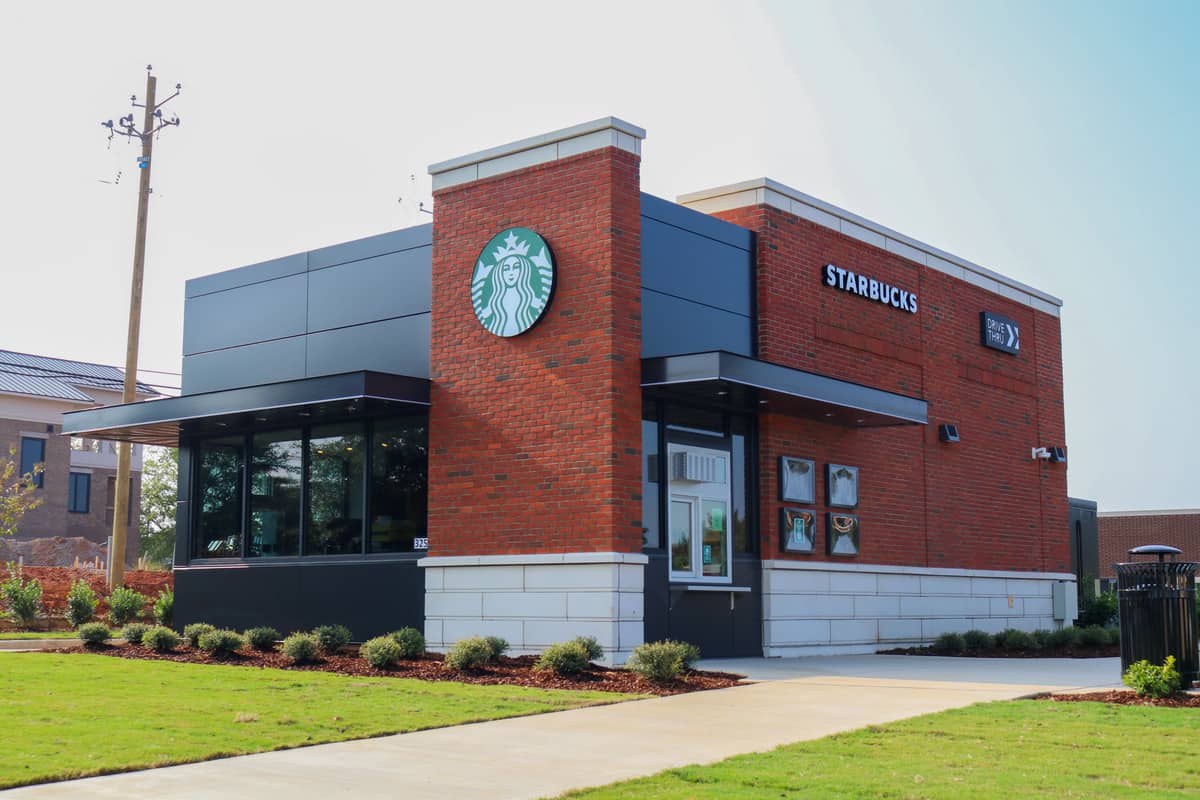
In most markets around the world, Starbucks stores are company-owned and operated by Starbucks itself. That means the corporation controls the real estate, hires the staff, sets prices, manages training, and keeps the profits. There is no individual franchisee in the traditional sense.
However—and this is where confusion creeps in—Starbucks does use licensed store agreements in certain contexts. These are often mistaken for franchises, but legally and operationally, they are very different.
Understanding this distinction is the foundation for everything else in this article.
The Short Answer: Is Starbucks a Franchise or Not?
Let’s be clear and definitive.
No, Starbucks is not a franchise in the traditional sense.
You cannot:
- Buy a Starbucks franchise
- Pay a franchise fee to open your own independent Starbucks
- Own a Starbucks store outright as a private individual in most markets
Instead, Starbucks operates under two primary models:
- Company-Owned Stores
These make up the majority of Starbucks locations worldwide. Starbucks owns the store, the equipment, the inventory, and employs every barista and manager. - Licensed Stores
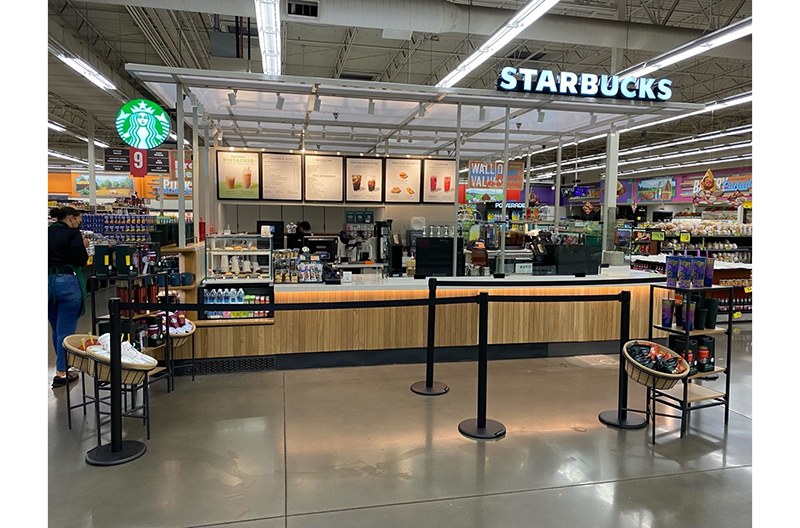
These are operated by large partners (not individuals) such as airports, universities, hospitals, grocery chains, or international conglomerates. The partner operates the store, but Starbucks retains strict control over branding, products, and experience.
From the outside, a licensed Starbucks looks identical to a company-owned one. From the inside, the business relationship is completely different from franchising.
This distinction matters—especially if your goal is business ownership rather than brand affiliation.
How Starbucks Actually Grows Without Franchising

4
To understand why Starbucks doesn’t franchise, it helps to understand how it does grow.
Starbucks is obsessive about consistency. Coffee quality, store design, employee training, music playlists, cup markings—everything is standardized. Franchising introduces variability because franchisees are independent business owners with their own financial pressures and management styles.
By keeping stores company-owned, Starbucks maintains:
- Full control over customer experience
- Direct oversight of employee training and culture
- Faster implementation of new products and technology
- Centralized pricing and promotions
When Starbucks does not want to operate a store directly—such as in an airport, casino, or foreign country with regulatory complexity—it uses licensing agreements instead.
A licensing partner:
- Pays Starbucks for the right to use its brand and products
- Must follow strict operational rules
- Often already operates large retail or hospitality businesses
- Does not own the Starbucks brand or menu decisions
This model allows Starbucks to expand globally without giving up control.
Licensed Starbucks Stores vs Traditional Franchises: A Clear Comparison
One of the biggest mistakes aspiring entrepreneurs make is assuming licensed stores equal franchises. They don’t.
Here’s a simplified breakdown.
Traditional Franchise (e.g., McDonald’s):
- Individual or small group ownership
- Franchise fee + ongoing royalties
- Franchisee hires staff and manages operations
- Brand provides systems, training, and marketing
- Franchisee keeps profits after fees
Starbucks Licensed Store:
- Operated by large corporations or institutions
- No public franchise offering
- Starbucks controls menu, branding, suppliers
- Licensee follows strict guidelines
- Profits and structure depend on licensing contract
In other words, Starbucks partners with operators, not entrepreneurs. The door is not open to the general public.
Why Starbucks Chooses Not to Franchise (And Probably Never Will)
This decision isn’t accidental—it’s strategic.
Starbucks has built its brand on three pillars:
- Premium experience
- Employee culture (“partners,” not workers)
- Product consistency at global scale
Franchising threatens all three.
Imagine a franchise owner cutting training hours to save money. Or sourcing cheaper ingredients. Or understaffing during peak hours. These decisions might improve a single store’s margins but damage the brand long-term.
By owning or tightly licensing stores, Starbucks ensures:
- Uniform employee benefits and wages
- Centralized ethical sourcing and sustainability initiatives
- Rapid rollout of innovations like mobile ordering
- Tight control over store ambiance and customer flow
From a corporate perspective, the trade-off is worth it—even if it means slower expansion in some regions.
Benefits of Starbucks’ Model (And Who It Works For)
While this model shuts out individual franchise buyers, it offers massive benefits in other ways.
For Customers
- Predictable quality anywhere in the world
- Consistent service standards
- Familiar menu with local adaptations
For Employees
- Direct employment with Starbucks
- Standardized benefits and training
- Clear career progression paths
For Corporate Partners
- Association with a globally trusted brand
- Proven systems without full ownership risk
- Strong foot traffic and brand equity
For Starbucks
- Full brand control
- Higher long-term profit retention
- Stronger corporate culture
If your goal is to own a Starbucks, this model is frustrating. If your goal is to build a brand of similar scale and loyalty, it’s instructive.
Step-by-Step: What to Do If You Want a “Starbucks-Like” Business


4
If you can’t franchise Starbucks, what can you do?
Here’s a practical, realistic path many successful café owners take.
Step 1: Study Starbucks as a System, Not a Product
Look beyond the drinks. Analyze:
- Store layouts
- Queue flow
- Menu psychology
- Loyalty programs
- Seasonal marketing
Starbucks sells habits, not just coffee.
Step 2: Choose an Alternative Franchise (If You Want Structure)
There are excellent coffee franchises that do accept individual owners. These offer brand support without Starbucks-level restrictions.
Step 3: Build an Independent Brand (If You Want Control)
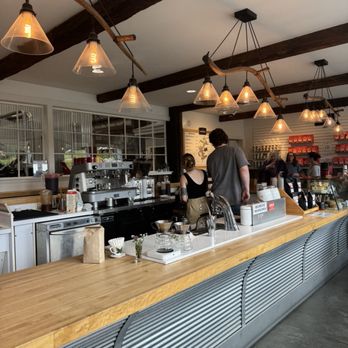
Many profitable cafés outperform Starbucks locally by:
- Focusing on community
- Offering specialty or local roasts
- Creating a unique atmosphere
- Hosting events or collaborations
Step 4: Invest in Training and Experience
Great coffee is expected. Great service is remembered. This is where Starbucks excels—and where independents can win.
Step 5: Think Long-Term
Starbucks didn’t become Starbucks overnight. Sustainable growth beats rapid expansion every time.
Tools, Alternatives, and Smart Recommendations
If your heart is set on coffee entrepreneurship, here are practical options.
Coffee Franchises (Franchise Model):
- Lower brand recognition than Starbucks
- Clear ownership path
- Franchise fees and royalties apply
- Faster launch with systems in place
Independent Café (Owner-Operated):
- Full creative and financial control
- Higher risk, higher upside
- Requires strong branding and operations
Licensed Concepts (Advanced Operators):
- Requires corporate scale
- Often invitation-only
- Complex contracts
For most individuals, the independent or franchise route is the most realistic—and rewarding.
Common Misconceptions About Starbucks Franchising (And the Truth)
Let’s clear up the most common myths.
“I heard you can franchise Starbucks overseas.”
No. International stores are usually licensed to large corporations, not individuals.
“Licensed stores are the same as franchises.”
They’re not. The legal and operational structures differ significantly.
“I can partner with Starbucks if I have enough money.”
Capital alone isn’t enough. Starbucks selects partners strategically.
“Owning a Starbucks guarantees profit.”
Even Starbucks closes underperforming stores. No location is risk-free.
Understanding these realities prevents costly assumptions.
Final Thoughts: So, Is Starbucks a Franchise?
The honest answer remains:
Starbucks is not a franchise you can buy—but it is a masterclass in brand-driven growth.
For aspiring business owners, Starbucks shouldn’t be seen as a missed opportunity. It should be seen as a blueprint. The real lesson isn’t how to own a Starbucks—it’s how to build something people trust enough to visit daily.
If you want coffee entrepreneurship, the path is still wide open. It just requires creativity, patience, and a willingness to build something uniquely yours.
FAQs
Is Starbucks a franchise in the USA?
No. Most U.S. Starbucks stores are company-owned, with some licensed locations in airports and campuses.
Can an individual own a Starbucks store?
Not in the traditional sense. Individuals cannot purchase a Starbucks franchise.
What is a licensed Starbucks store?
A store operated by a partner (like an airport or university) under strict Starbucks guidelines.
Does Starbucks charge franchise fees?
No franchise fees exist because Starbucks does not franchise.
Are licensed Starbucks stores profitable?
Profitability depends on location, costs, and contract terms.

Michael Grant is a business writer with professional experience in small-business consulting and online entrepreneurship. Over the past decade, he has helped brands improve their digital strategy, customer engagement, and revenue planning. Michael simplifies business concepts and gives readers practical insights they can use immediately.