
Introduction
If you run a lawn care business, you already know this truth: mowing grass is the easy part. The real stress shows up when something goes wrong. A rock shoots out from a mower and cracks a client’s window. A helper slips on wet grass and twists an ankle. A customer claims your fertilizer damaged their prized roses. Suddenly, the business you built with sweat, early mornings, and long weekends is on the line.
That’s exactly why lawn care business insurance isn’t just another expense—it’s a survival tool.
Many new lawn care owners delay insurance because it feels complicated, expensive, or unnecessary when you’re “just cutting grass.” Experienced operators know better. One accident can cost more than years of insurance premiums combined. The right coverage protects your income, your equipment, your reputation, and your peace of mind.
In this guide, you’ll learn what lawn care business insurance really is, how it works in the real world, what coverage you actually need (and what you don’t), how to get insured step by step, common mistakes that cost owners thousands, and how to choose coverage that grows with your business. Whether you’re a solo operator or managing multiple crews, this article is built to help you make confident, smart insurance decisions.
What Is Lawn Care Business Insurance, Really?

At its core, lawn care business insurance is a collection of policies designed to protect you financially when something unexpected happens while running your lawn or landscaping operation. Think of it like a safety net under a tightrope walker. You hope you never need it—but you’d be reckless to perform without it.
Unlike personal insurance, business insurance covers risks that come with serving clients, using commercial equipment, operating vehicles for work, and employing people. Lawn care has unique risks because it combines physical labor, machinery, chemicals, client property, and public interaction—often all at once.
A simple way to understand it is to compare insurance types to tools in your trailer. You don’t bring one tool to every job. You bring the right tools for the task. Insurance works the same way. General liability protects you from third-party damage. Workers’ comp protects your crew. Commercial auto covers your trucks. Equipment insurance protects your gear.
Many people confuse lawn care business insurance with a single policy. In reality, it’s usually a tailored bundle. The exact mix depends on how big your operation is, what services you offer, whether you have employees, and how you operate day to day.
The goal isn’t to buy “more insurance.” The goal is to buy the right insurance so that one bad day doesn’t wipe out years of hard work.
Why Lawn Care Business Insurance Matters More Than You Think
Most lawn care owners don’t realize how exposed they are until something goes wrong. And when it does, the consequences can be brutal.
Imagine this scenario. You’re mowing a routine residential yard. A hidden rock launches from the mower and smashes a sliding glass door. The repair bill is $3,500. The homeowner expects you to pay. Without insurance, that money comes straight out of your pocket. With insurance, you file a claim and move on.
Now imagine a worse scenario. A client trips over your equipment left near the driveway and breaks an arm. Medical bills climb past $20,000. They sue. Without liability insurance, you’re personally responsible. That could mean draining savings, selling equipment, or worse.
Insurance also impacts your ability to grow. Many commercial clients, homeowners associations, and property managers require proof of insurance before they’ll even consider hiring you. Without it, you’re locked out of higher-paying work.
On a deeper level, lawn care business insurance protects your confidence. When you know you’re covered, you work better. You bid jobs more aggressively. You hire help sooner. You stop worrying about worst-case scenarios and focus on building your business.
Types of Lawn Care Business Insurance You Should Know
General Liability Insurance
General liability insurance is the foundation of lawn care business insurance. If you only carry one policy, this is it.
It covers third-party bodily injury, property damage, and related legal costs. That means if you damage a customer’s property or someone gets hurt because of your operations, this policy steps in.
Common real-world examples include:
- Breaking windows, fences, or siding
- Damaging sprinkler systems
- A client slipping on freshly cut grass
- Chemical overspray damaging plants or property
General liability doesn’t cover your own injuries or equipment, but it protects you from the most common and costly claims lawn care businesses face.
Commercial Auto Insurance
If you use a truck or trailer for business, personal auto insurance usually isn’t enough. Commercial auto insurance covers vehicles used for work-related activities.
It protects you if:
- You cause an accident while driving to a job
- Your truck is damaged in a collision
- Someone is injured due to your work vehicle
This is especially important if your truck has signage, carries equipment, or pulls trailers. One denied claim can be financially devastating.
Workers’ Compensation Insurance
If you have employees, workers’ compensation is often legally required. Even if it’s not mandatory in your state, it’s smart coverage.
Workers’ comp covers medical expenses, lost wages, and rehab costs if an employee is injured on the job. Lawn care is physical, and injuries happen—even to careful workers.
Without it, you could be personally liable for employee injuries, which can escalate quickly.
Commercial Equipment Insurance
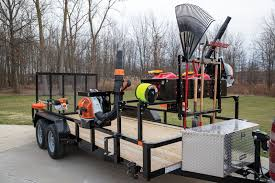
Your mowers, trimmers, blowers, and sprayers are your livelihood. Equipment insurance covers repair or replacement if your gear is stolen, damaged, or vandalized.
This is especially valuable if you:
- Leave equipment on trailers overnight
- Transport gear frequently
- Use high-value commercial machines
Replacing equipment out of pocket can cripple cash flow.
Professional Liability (Errors & Omissions)
This coverage protects you if a client claims your advice or service caused financial harm. For lawn care, this might include:
- Applying the wrong treatment
- Over-fertilizing and killing turf
- Pest control mistakes
It’s not always necessary for basic mowing but becomes more important as you offer specialized services.
Who Needs Lawn Care Business Insurance?
The short answer is: almost everyone charging money for lawn care services.
Solo operators often assume they’re too small to need insurance. In reality, small businesses are more vulnerable because they lack financial buffers. One lawsuit can end everything.
Insurance is essential if you:
- Work on client property
- Use power equipment
- Employ workers
- Drive for business purposes
- Want to work with commercial clients
- Want long-term stability
Even part-time lawn care operators benefit from basic coverage. Risk doesn’t scale down just because your business does.
How Lawn Care Business Insurance Works in Real Life
Insurance isn’t about paying premiums and forgetting about it. It’s a system.
You pay a monthly or annual premium. In exchange, the insurer agrees to cover certain risks outlined in your policy. If something happens, you file a claim. The insurer investigates and, if covered, pays for damages or legal defense up to your policy limits.
Understanding deductibles, limits, and exclusions matters. A cheap policy with low limits may leave you exposed. A well-structured policy balances cost with protection.
The best operators review coverage yearly as their business evolves.
Step-by-Step Guide to Getting Lawn Care Business Insurance
Step 1: Assess Your Business Risk
Start by looking at how you operate. Consider:
- Services offered (mowing only vs. chemicals, landscaping)
- Residential vs. commercial clients
- Employees vs. solo
- Vehicles and equipment used
- Average job size and location
This helps you avoid overpaying or underinsuring.
Step 2: Choose Essential Coverage Types
Most lawn care businesses start with:
- General liability
- Commercial auto
- Equipment coverage
- Workers’ comp (if applicable)
Add professional liability if you provide advisory or treatment-based services.
Step 3: Get Multiple Quotes
Prices vary widely. Get quotes from:
- Industry-specialized insurers
- Independent brokers
- Online business insurance platforms
Compare coverage, not just price.
Step 4: Review Policy Details Carefully
Look for:
- Coverage limits
- Deductibles
- Exclusions
- Claim process
- Customer reviews
Ask questions. A good agent explains, not sells.
Step 5: Purchase and Keep Proof Handy
Once insured, keep certificates accessible. Clients often request proof before work begins.
Step 6: Review Annually
As you grow, your insurance should grow with you. Update coverage when:
- Hiring employees
- Buying new equipment
- Adding services
- Expanding territory
Tools, Comparisons, and Recommendations
There’s no one-size-fits-all insurer for lawn care businesses. Some specialize in contractors. Others focus on small service businesses.
Bundled Policies vs. Standalone Coverage
Bundled policies often save money and simplify management. Standalone policies offer customization.
Bundled pros:
- Lower premiums
- Easier administration
Standalone pros:
- Tailored coverage
- Flexibility
Online Platforms vs. Local Agents
Online platforms are fast and competitive. Local agents offer personalized advice and local compliance knowledge.
Best approach? Use both. Compare online quotes, then review with an agent.
Common Lawn Care Insurance Mistakes (and How to Fix Them)
One of the biggest mistakes is underestimating risk. Many owners think, “It won’t happen to me.” That mindset is expensive.
Another common error is relying on personal auto insurance for work vehicles. Most claims get denied when the insurer discovers business use.
Some owners choose the cheapest policy without reading exclusions. Cheap coverage that doesn’t pay out is wasted money.
Others forget to update insurance after growth. New employees or services can invalidate coverage if not disclosed.
Fixes are simple:
- Be honest about operations
- Review policies annually
- Ask questions
- Treat insurance as part of business strategy, not a formality
The Real Cost of Lawn Care Business Insurance
Costs vary by location, services, and size. On average:
- General liability: moderate monthly cost
- Commercial auto: depends on vehicle and driving record
- Workers’ comp: based on payroll
- Equipment coverage: based on value
Insurance should be viewed as risk management, not overhead. One avoided claim can justify years of premiums.
How Insurance Helps You Win Better Clients
Professional clients want insured contractors. Insurance signals professionalism, reliability, and accountability.
It helps you:
- Win HOA contracts
- Secure commercial properties
- Charge premium rates
- Build long-term trust
Insurance doesn’t just protect you—it markets you.
Scaling Your Lawn Care Business with Insurance in Mind
As you grow, insurance enables growth rather than restricting it. You can:
- Hire confidently
- Invest in better equipment
- Expand services
- Enter commercial markets
Think of insurance as infrastructure. You don’t notice it until it fails—but when it’s solid, everything else works better.
Conclusion
Lawn care business insurance isn’t about fear. It’s about foresight. It’s the difference between running on edge and running with confidence. Accidents happen. Claims happen. The businesses that survive and grow are the ones prepared for them.
When you invest in the right coverage, you protect your income, your reputation, and your future. You show clients you’re professional. You give yourself permission to grow without constantly worrying about what could go wrong.
If you’re serious about your lawn care business, insurance isn’t optional—it’s essential. Review your coverage, ask smart questions, and treat insurance as a tool, not a burden.
Your future self will thank you.
Frequently Asked Questions About Lawn Care Business Insurance
Do I need lawn care business insurance if I’m a solo operator?
Yes. Solo operators are often more financially vulnerable. One claim can wipe out personal savings.
What’s the minimum insurance for a lawn care business?
General liability is usually the minimum. Commercial auto is essential if you use a vehicle for work.
Is lawn care insurance required by law?
Requirements vary by state. Workers’ compensation is often mandatory if you have employees.
Does lawn care insurance cover chemical application mistakes?
Only if you have the right liability or professional coverage. Always confirm.
Can I get insurance for seasonal lawn care work?
Yes. Many insurers offer flexible or seasonal policies.

Michael Grant is a business writer with professional experience in small-business consulting and online entrepreneurship. Over the past decade, he has helped brands improve their digital strategy, customer engagement, and revenue planning. Michael simplifies business concepts and gives readers practical insights they can use immediately.