

A few years ago, I had a friend — let’s call him Alex — who was building a business with a childhood buddy. Alex handled all the day-to-day work: talking to clients, managing operations, negotiating deals. His friend, meanwhile, contributed some capital but stayed quiet, trusting Alex to steer the ship. Over time, the business grew — but so did its complexity and liability. One day, they realized: “If the business fails, we don’t want both of us sinking together.” That’s when they restructured their company as a “limited partnership.” By doing that, Alex remained responsible for operations, while his friend’s risk was capped to his investment.
This simple scenario shows the power and appeal of the concept known as “LP.” In this post I’ll walk you through what LP really is, why it matters, and how you can use or understand it — whether you are a small business owner, an investor, or just curious.
What Exactly is an “LP”?
Definition — Limited Partnership (LP) in plain English
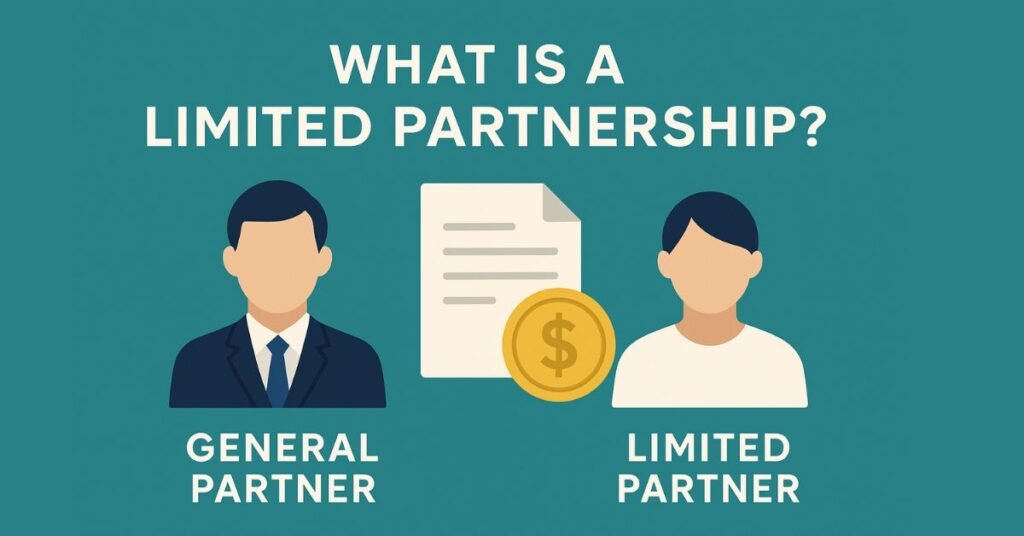
A limited partnership (LP) is a business structure involving at least two types of partners:
- General Partner (GP): This partner runs the business, makes decisions, and carries full liability for the business’s obligations.
- Limited Partner (LP): This partner contributes capital (money, assets, etc.) but does not participate in managing day-to-day operations. Their liability is limited to the amount they invested.
In short: LPs get in as investors — not operators — shielding themselves from unlimited liability.
ALSO READ: Living in an AI-First World — What It Means, Why It Matters, and How to Thrive in It
How LP differs from other structures
Unlike a general partnership, where all partners are equally liable and involved, LP separates responsibilities and risks. Unlike a corporation, LPs avoid some of the heavy formalities: no board structure, no rigid stock-issuance process (unless it becomes a public entity). Compared to a limited liability company (LLC) or limited liability partnership (LLP), LP structures maintain a clear distinction between active managers and passive investors.
Why People Use LPs — The Benefits
There are many reasons a business or investors might choose an LP structure:
- Limited Liability: For the limited partners, personal risk is capped at the investment amount — personal assets are typically protected.
- Simplicity & Flexibility: LPs avoid some of the complex structure and governance of corporations; good for small or family businesses.
- Ease for Passive Investors: LPs — e.g. people who invest but don’t want to manage, or just want to diversify via real estate or venture funds — get to participate without full obligations.
- Profit Sharing & Tax Benefits: Profits are typically shared per agreement; in many jurisdictions, LPs offer pass-through taxation (i.e. profits pass to partners, avoiding double taxation at corporate level).
In real-world usage, this structure helps founders, investors, and small business partners collaborate with clear boundaries — ideal when some want to manage and others just want to invest.
Real-World Example: When LP Meets the Public Markets
Let me show you a real-world example to tie this together: the company USA Compression Partners, LP — often just “USAC.”
- USAC is structured as an LP: it began as a partnership, and later became a publicly traded entity.
- In December 2025, USAC announced the acquisition of J-W Power Company — a sizable acquisition (~ $860 million), expanding its fleet and service reach.
- This deal illustrates how an LP can grow, raise capital, acquire other businesses — all while leveraging the LP structure’s flexibility.
For investors, publicly traded LPs/MLPs like USAC can be interesting: they provide liquidity (shares can be traded), offer income (e.g. regular distributions or dividends), and have underlying business value in assets and operations.
How to Set Up (or Invest in) an LP — Step-by-Step Guide
If you’re considering forming an LP (or investing as a limited partner), here’s a basic roadmap:
- Define the Partners & Roles — Decide who will be the GP (manager) and who will be LP(s) (investors).
- Draft a Partnership Agreement — Clearly state contribution amounts, profit-sharing, decision-making rights, liability limits, and what happens if someone wants out.
- Register the Partnership — In many jurisdictions (e.g. U.S.), LPs must register with the relevant state authorities.
- Capital Contribution — LPs contribute agreed capital (cash, assets, etc.). GP may contribute too (often for operational control).
- Begin Operations — GP manages business; LP remains passive (unless agreement allows otherwise).
- Profit Distribution & Accounting — Profits and losses are allocated per agreement; LPs get their share, GP handles management, and tax treatment follows partnership rules.
If investing rather than building: you can look for publicly traded LPs / master limited partnerships (MLPs) — like USAC — which combine the LP model with liquidity (shares traded on public exchanges).
Common Mistakes & Pitfalls to Avoid
- Poorly drafted agreement: Without a clear partnership agreement, disputes arise over profits, control, exit — so clarity from day one is vital.
- GP liability under-estimated: The general partner carries all liability — risky if business fails or takes on heavy debt.
- Assuming LP role = no risk: LPs only cap liability to investment — but that doesn’t mean zero risk (loss of investment possible).
- Ignoring tax/ legal compliance: Especially if operating across states or internationally — registration, tax filings, reporting must be correct.
- Mixing roles: If “limited partners” get involved in operations/management, legal liability protections may be jeopardized.
Is LP Right for You? — When to Use It (or Invest)
An LP structure (or investing in one) can be a great fit if:
- You have a trusted partner or team member ready to manage operations, and you prefer to invest without daily involvement.
- You want to limit your liability to only what you invest, not risk personal assets beyond that.
- You want a flexible, relatively simple structure without the burdens of corporate governance.
- You are an investor seeking passive exposure — maybe to real estate, a small business, or even energy infrastructure (via publicly traded LPs/MLPs).
If you want more control or plan to actively manage, a standard partnership or corporation might be better suited.
Key Takeaways
- An LP divides business between those who manage (GP) and those who merely invest (LP), offering limited liability for investors.
- It’s a flexible structure — useful for small businesses, real estate, funds, or even public companies (via MLPs).
- Clear agreements, legal compliance, and understanding liability are critical.
- For investors, publicly traded LPs/MLPs can offer income, liquidity, and exposure — but come with sector-specific and market risks.
Whether you’re building a business with a partner or considering investing, LP offers a middle ground: opportunity without overbearing risk, participation without needing to manage.
FAQs
Q: Can a limited partner ever manage the company?
A: Typically no — by definition, a limited partner is “passive.” If a limited partner takes part in management, they may risk losing liability protection.
Q: Is an LP taxed like a company?
A: Usually not. Many LPs are “pass-through” entities: profits/losses pass to partners and get taxed at personal level — avoiding double taxation.
Q: Can I invest in an LP without being a partner?
A: Yes — via publicly traded LPs / master limited partnerships (MLPs), you can buy units or shares just like a regular stock.
Q: Does LP structure protect personal assets completely?
A: For limited partners, yes (liability limited to capital contribution). But general partners remain fully liable.
Final Thoughts & What You Should Do Next
If you’re thinking of starting a venture with partners — or want to invest passively in a business or fund — consider whether an LP structure might suit you. It offers a balance of flexibility, limited liability, and profit-sharing without the full corporate overhead.
Curious to explore publicly traded LPs or MLPs — perhaps to see real-world examples and current performance? Let me know: I can gather a short list tailored to your interests (industry, dividend yield, risk level) to help you get started.

Hannah Price is a digital journalist who covers breaking news, global events, and trending stories with accuracy and speed. She has previously contributed to several online magazines and has built a reputation for verifying facts before publishing. Hannah believes in responsible reporting and aims to present stories in a way that readers can trust.