

Thanksgiving is more than a date circled on the calendar. It is a season woven with history, family traditions, and the irresistible aroma of roast Thanksgiving turkey, stuffing, creamy mashed potatoes, cranberry sauce, and pumpkin pie fresh from the oven. While today the holiday stands as a moment for reflection and shared meals, its roots reach back centuries to the Pilgrims and the Wampanoag people who gathered for a harvest feast in 1621 at Plymouth Colony. Over time, Thanksgiving has evolved into one of the most cherished celebrations in American culture — a day to gather, eat, and practice gratitude.
In this guide, we explore the meaning behind Thanksgiving, its origins, classic foods, modern celebrations like Friendsgiving, hosting tips, and recipe ideas for every dietary need. Whether you’re planning your first Thanksgiving dinner or continuing long-standing family traditions, this article will guide you toward a meaningful and delicious holiday.
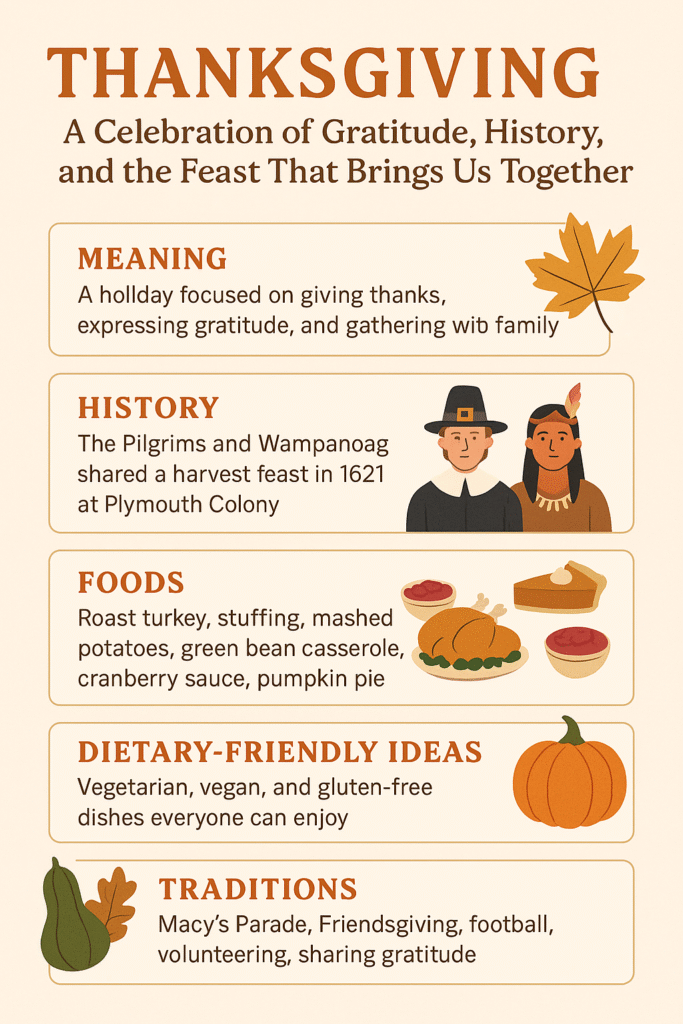
The Meaning of Thanksgiving: More Than a Holiday
The heart of Thanksgiving lies in giving thanks. At the core is gratitude, a timeless value expressed through shared meals, storytelling, and moments of reflection. Families often begin dinner by sharing what they are thankful for, while others write in gratitude journals or say Thanksgiving prayers and blessings before eating. Research and cultural tradition agree — practicing gratitude improves emotional well-being and strengthens family bonds.
Thanksgiving also represents unity, generosity, and community. Many families volunteer at food banks, donate to shelters, or prepare meals for neighbors in need. Schools teach children about gratitude, community sharing, and the spirit of coming together. This is where Thanksgiving transcends time — it reminds us that even in a fast-moving world, grateful hearts can slow down and connect.
A Look Back: The First Thanksgiving and Historical Context
The iconic story of the first Thanksgiving traces back to 1621, when English settlers known as the Pilgrims shared a harvest feast with the Wampanoag tribe. The gathering lasted three days and included wildfowl, corn, fish, and seasonal crops — though not the classic Thanksgiving turkey we know today.
However, modern historians emphasize that the story is more complex. The holiday sits at the intersection of cooperation and conflict, colonization and survival. Many Native American communities use this time to reflect on history honestly, highlighting loss, resilience, and cultural strength. Recognizing these perspectives enriches our understanding of Thanksgiving, honoring the truth behind the tradition.
The Thanksgiving Feast: Classic Foods We Can’t Celebrate Without
No Thanksgiving table is complete without a spread of traditional Thanksgiving recipes. The star of many tables is the roast turkey — herb-brined, oven-baked, or slow-cooked until golden and juicy. Alongside it, you’ll find:
| The Classics | Flavor Notes |
|---|---|
| Stuffing/Dressing | Bread, herbs, celery, onions, or sausage variations |
| Mashed Potatoes | Smooth, buttery, served with rich homemade gravy |
| Sweet Potatoes & Candied Yams | Marshmallows, pecans, or simple savory butter |
| Green Bean Casserole | Crispy onions + creamy mushroom sauce |
| Cranberry Sauce | Fresh, jellied, citrus-infused, or spiced |
| Pumpkin Pie | Warm spices, flaky crust, whipped cream swirl |
| Pecan Pie & Apple Pie | Sticky sweet or cinnamon-spiced classics |
ALSO READ: Sawyer Sweeten: The Child Actor Who Became Part of a Sitcom Legacy
The beauty of the Thanksgiving menu is how easily it adapts. Some families bake pecan praline sweet potato casserole, others serve bourbon pumpkin pie, while many bring cultural fusion dishes — from tamales to biryani to Korean-glazed turkey wings.
Dietary-Friendly Thanksgiving Ideas (Everyone Can Eat!)
Modern celebrations embrace inclusivity. Whether you’re hosting a crowd or preparing for guests with dietary restrictions, here are delicious alternatives:
Vegetarian or Vegan Thanksgiving
- Mushroom-walnut roast
- Vegan mashed potatoes with olive oil
- Roasted squash with maple glaze
- Dairy-free green bean casserole
- Vegan pumpkin pie with coconut cream
Gluten-Free Options
- Gluten-free cornbread stuffing
- Sweet potato puree instead of mash
- Almond-flour pumpkin pie crust
- Herb-roasted turkey with natural pan gravy
These menu ideas ensure everyone can enjoy the Thanksgiving dinner table.
Hosting Thanksgiving: Stress-Free Planning Tips
Hosting Thanksgiving can feel overwhelming — but with preparation, it becomes joyful, not chaotic.
One Week Before
- Finalize your menu
- Create a grocery checklist
- Plan table decor or a Thanksgiving tablescape
- Confirm who is bringing sides or desserts
Day-Before Prep
- Chop vegetables and herbs
- Bake pies early (pumpkin and pecan store beautifully)
- Set the table or arrange centerpieces
- Brine the turkey (game-changer!)
Day-Of Tips
- Start the turkey early
- Warm sides 1 hour before dinner
- Play music, light candles, enjoy the moment
Guests often ask What should I bring to Thanksgiving? Suggest wine, bread rolls, dessert, or a vegetable side — simple contributions that reduce your load.
Modern Ways to Celebrate: Traditions Old and New
Thanksgiving isn’t just one meal — it’s an experience.
Classic Traditions
- Macy’s Thanksgiving Day Parade
- NFL Thanksgiving football games
- Watching movies and holiday specials
- Breaking the wishbone for luck
New-Era Trends
- Friendsgiving pot-luck gatherings
- Gratitude journaling and mindfulness rituals
- Board games, card games, and trivia
- Post-dinner pumpkin pie & coffee hour
Many families extend the celebration through the weekend — decorating for Christmas, shopping holiday deals, or enjoying leftover Thanksgiving turkey sandwiches and soups.
Why Thanksgiving Matters Today
In a world of distractions, Thanksgiving calls us back to what is real — food, family, friendship, and grateful hearts. It invites us to reflect, reconnect, and remember that gratitude is powerful. Whether you honor the history, cherish tradition, or build new rituals, Thanksgiving is a celebration of abundance, resilience, and human connection.
So light the candles, share the table, tell your stories, laugh with loved ones, and fill your plates with warm pumpkin pie and cranberry sauce. Because Thanksgiving isn’t just a holiday — it’s a reminder to pause and be thankful for the moments that matter.
FAQs
1. What is Thanksgiving?
Thanksgiving is a national holiday celebrated primarily in the United States and Canada, focused on giving thanks, sharing meals with family, and reflecting on gratitude.
2. Why do we celebrate Thanksgiving?
People celebrate Thanksgiving to honor the historical 1621 harvest feast between the Pilgrims and the Wampanoag tribe, and today it has become a tradition of gratitude, family gatherings, and shared meals.
3. When is Thanksgiving celebrated?
In the United States, Thanksgiving is celebrated on the fourth Thursday of November each year.
In Canada, it is observed on the second Monday of October.
4. What foods are traditionally served on Thanksgiving?
Traditional Thanksgiving meals include roast turkey, stuffing, mashed potatoes, cranberry sauce, green bean casserole, sweet potatoes, gravy, and desserts like pumpkin pie and pecan pie.
5. What is the meaning behind Thanksgiving?
The meaning of Thanksgiving is to express gratitude, strengthen family bonds, reflect on blessings, and share abundance through food, connection, and kindness.
6. Who celebrated the first Thanksgiving?
The first Thanksgiving was celebrated in 1621 by the Pilgrims and the Wampanoag people in Plymouth Colony after a successful harvest.
7. What is Friendsgiving?
Friendsgiving is a modern celebration similar to Thanksgiving, but instead of family, it involves friends gathering to share food, drinks, and gratitude.

Hannah Price is a digital journalist who covers breaking news, global events, and trending stories with accuracy and speed. She has previously contributed to several online magazines and has built a reputation for verifying facts before publishing. Hannah believes in responsible reporting and aims to present stories in a way that readers can trust.