
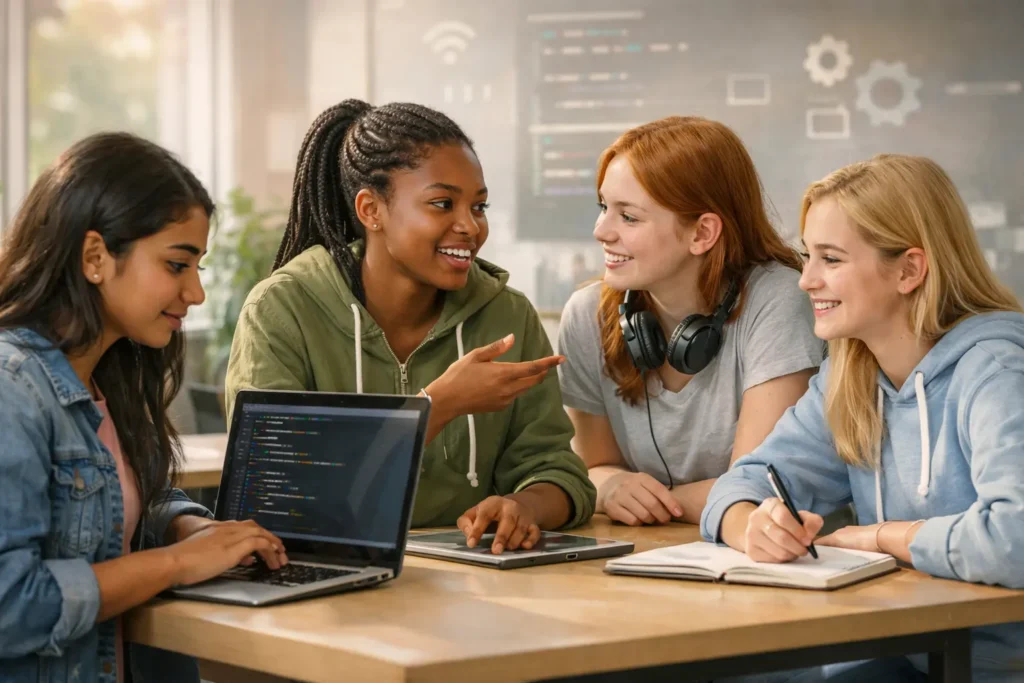
When people talk about the tech industry, they often default to the same images: hoodie-wearing coders, Silicon Valley offices, and a workforce that still doesn’t reflect the diversity of the real world. That’s exactly why Gascoigne Girls in Tech matters. This isn’t just another initiative with a catchy name — it’s a movement rooted in community, access, and long-term impact.
Gascoigne Girls in Tech exists because too many girls, especially from underrepresented or disadvantaged backgrounds, are still told implicitly (and sometimes explicitly) that technology “isn’t for them.” The confidence gap starts early. Exposure comes late. Opportunities feel distant. By the time career choices are made, many girls have already self-selected out of tech without ever truly trying it.
This article is a deep, practical exploration of Gascoigne Girls in Tech — what it is, why it matters, and how it works in the real world. You’ll learn how programs like this help girls build technical skills, confidence, and career pathways, how schools and communities can support them, and what makes these initiatives succeed where others fail.
Whether you’re an educator, parent, policymaker, nonprofit leader, or simply someone who cares about closing the gender gap in technology, you’ll walk away with clarity, context, and actionable insight.
Understanding Gascoigne Girls in Tech: What It Really Means
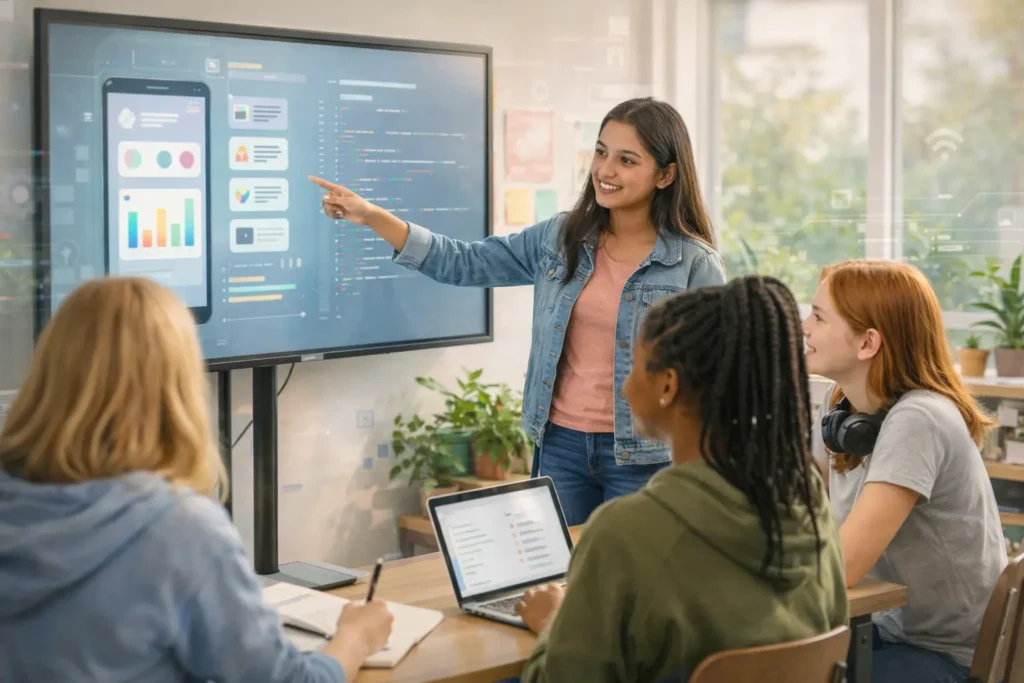
At its core, Gascoigne Girls in Tech is about early, meaningful exposure to technology for girls who might not otherwise have it. It’s not just teaching coding for the sake of coding. It’s about creating a safe, encouraging environment where girls can experiment, fail, learn, and grow without judgment.
Think of it like learning a new language. If you’re dropped into it late, with no support, it feels intimidating. But if you’re introduced early, in a playful, supportive way, it becomes second nature. Gascoigne Girls in Tech works on the same principle. It introduces technology as a tool for creativity, problem-solving, and real-world impact — not as something reserved for “geniuses” or “techy people.”
These programs typically blend:
- Digital literacy (understanding how technology works, not just how to use it)
- Hands-on tech skills like coding, robotics, and data basics
- Soft skills such as teamwork, communication, and confidence-building
- Career awareness through role models and real-world examples
What makes Gascoigne Girls in Tech distinctive is its community-first approach. It recognizes that girls don’t learn in a vacuum. Their confidence is shaped by peers, family expectations, cultural narratives, and access to resources. By embedding tech education within a supportive local ecosystem, the program tackles barriers that traditional classroom learning often overlooks.
Why Gascoigne Girls in Tech Matters More Than Ever
The digital economy isn’t coming — it’s already here. Nearly every career, from healthcare to fashion to construction, now intersects with technology in some way. Yet women remain significantly underrepresented in tech roles, particularly in technical and leadership positions.
This gap doesn’t start at hiring. It starts years earlier, when girls are less likely to be encouraged to tinker, code, or pursue STEM interests. Gascoigne Girls in Tech addresses this root problem head-on.
There are three reasons this work is especially urgent right now.
First, the skills gap is real. Employers across industries are struggling to find people with digital and technical skills. Ignoring half the population isn’t just unfair — it’s impractical.
Second, technology shapes society. If the people building systems, algorithms, and platforms don’t reflect diverse experiences, those tools will inevitably carry bias. Empowering girls to participate means creating more inclusive, ethical technology.
Third, confidence compounds. Girls who see themselves succeed in tech early are far more likely to pursue further education, internships, and careers in the field. One positive experience can change an entire trajectory.
Gascoigne Girls in Tech isn’t just preparing girls for jobs. It’s preparing them to have a voice in shaping the future.
Benefits and Real-World Use Cases
The impact of Gascoigne Girls in Tech goes far beyond learning how to code. The benefits ripple outward, affecting individuals, families, schools, and communities.
For the girls themselves, the most immediate benefit is confidence. Many participants report that before joining, they assumed tech was “too hard” or “not for people like me.” Afterward, they talk about problem-solving, creativity, and resilience with a sense of ownership.
Skill-wise, participants gain:
- Foundational coding and computational thinking
- Digital creativity through projects like websites, games, or apps
- Exposure to emerging fields such as AI, cybersecurity, or data science
- Transferable skills like logical thinking and collaboration
In real-world scenarios, this plays out in powerful ways. A girl who builds a simple app to solve a local problem suddenly understands that technology isn’t abstract — it’s a tool she can control. Another might discover an interest in UX design after realizing she enjoys making digital experiences more user-friendly.
For schools and communities, Gascoigne Girls in Tech programs often lead to:
- Increased engagement in STEM subjects
- Stronger links between education and local industry
- Positive role models for younger students
- A more inclusive learning culture overall
Parents frequently notice changes too — more curiosity, more ambition, and a willingness to try things that once felt intimidating.
How Gascoigne Girls in Tech Programs Work: A Step-by-Step Breakdown
While each initiative has its own structure, most Gascoigne Girls in Tech programs follow a clear, effective process that balances structure with flexibility.
Step one is outreach and trust-building. Successful programs don’t assume girls will automatically sign up. They work closely with schools, community groups, and families to explain what the program is and why it matters. This stage is critical for overcoming skepticism or fear around technology.
Step two is beginner-friendly onboarding. No prior experience is assumed. Sessions often start with simple, engaging activities that demystify technology — think visual coding tools, creative challenges, or collaborative games.
Step three is hands-on project learning. Instead of lectures, girls work on tangible projects. They might build a basic website, design a game, or program a robot. The emphasis is on learning by doing, with facilitators guiding rather than instructing.
Step four is exposure to role models. Meeting women who work in tech — especially those with similar backgrounds — makes a huge difference. It turns abstract possibilities into concrete paths.
Step five is reflection and progression. Girls are encouraged to reflect on what they’ve learned, celebrate successes, and explore next steps, whether that’s further learning, competitions, or career pathways.
The best programs adapt to the needs of their participants, adjusting pace, content, and support as confidence grows.
Tools, Platforms, and Learning Resources Used in Gascoigne Girls in Tech
Choosing the right tools can make or break a tech education program. Gascoigne Girls in Tech initiatives tend to prioritize accessibility, creativity, and scalability.
Commonly used beginner-friendly tools include visual coding platforms that allow girls to see immediate results without getting stuck in syntax. These tools are especially effective for building early confidence.
As skills develop, programs may introduce more advanced platforms for web development, app creation, or data analysis. The transition is gradual, ensuring girls don’t feel overwhelmed.
Free tools are often used in early stages because they remove financial barriers and allow learning to continue at home. Paid tools may come into play later, particularly when they offer industry-relevant experience or certifications.
When comparing free versus paid options, facilitators usually weigh:
- Ease of use
- Accessibility across devices
- Community support and learning resources
- Relevance to real-world tech careers
The key isn’t using the fanciest tools — it’s using tools that empower learning and creativity without intimidation.
Common Mistakes and How to Avoid Them
Even well-intentioned programs can fall short if they’re not carefully designed. One common mistake is assuming all girls learn the same way. A one-size-fits-all approach often leaves some participants disengaged. The fix is flexible pacing and multiple learning styles.
Another frequent issue is focusing too much on technical skills while neglecting confidence and mindset. Girls may learn to code but still feel they don’t “belong” in tech. Addressing this requires explicit encouragement, representation, and safe spaces for questions and failure.
Lack of continuity is another challenge. Short-term programs can spark interest but fail to provide pathways forward. Strong Gascoigne Girls in Tech initiatives build bridges to further learning, mentorship, or internships.
Finally, insufficient community involvement can limit impact. Programs thrive when parents, schools, and local organizations are actively engaged and invested.
Long-Term Impact: From Early Exposure to Career Pathways
The true success of Gascoigne Girls in Tech isn’t measured by how many lines of code participants write. It’s measured by what happens years later.
Girls who participate are more likely to choose STEM subjects, apply for tech-related opportunities, and envision themselves in roles they once thought were out of reach. Even those who don’t pursue tech careers benefit from improved digital literacy and confidence.
On a broader scale, these programs help shift cultural narratives. Younger students see girls coding and building. Parents see technology as accessible. Communities see local talent growing.
Over time, this creates a virtuous cycle where representation fuels participation, and participation fuels opportunity.
Conclusion
Gascoigne Girls in Tech is more than a program — it’s a blueprint for inclusive, effective tech education. By meeting girls where they are, building confidence alongside skills, and grounding learning in real-world relevance, it tackles the gender gap at its roots.
The digital future will be shaped by those who feel empowered to participate. Initiatives like Gascoigne Girls in Tech ensure that girls from every background aren’t just consumers of technology, but creators, leaders, and innovators.
If you’re in a position to support, advocate for, or learn from these programs, now is the time. The impact lasts far longer than any single workshop or course.
FAQs
What is Gascoigne Girls in Tech?
Gascoigne Girls in Tech is an initiative focused on empowering girls through technology education, confidence-building, and exposure to tech careers.
Who is Gascoigne Girls in Tech for?
It’s designed primarily for girls and young women, especially those from underrepresented or disadvantaged backgrounds, with little or no prior tech experience.
Do participants need coding experience?
No. Programs are beginner-friendly and assume no prior knowledge.
What skills do girls learn?
Participants learn digital literacy, coding basics, problem-solving, teamwork, and career awareness.
How does Gascoigne Girls in Tech support confidence?
Through hands-on projects, supportive mentors, and exposure to relatable role models.

Adrian Cole is a technology researcher and AI content specialist with more than seven years of experience studying automation, machine learning models, and digital innovation. He has worked with multiple tech startups as a consultant, helping them adopt smarter tools and build data-driven systems. Adrian writes simple, clear, and practical explanations of complex tech topics so readers can easily understand the future of AI.