
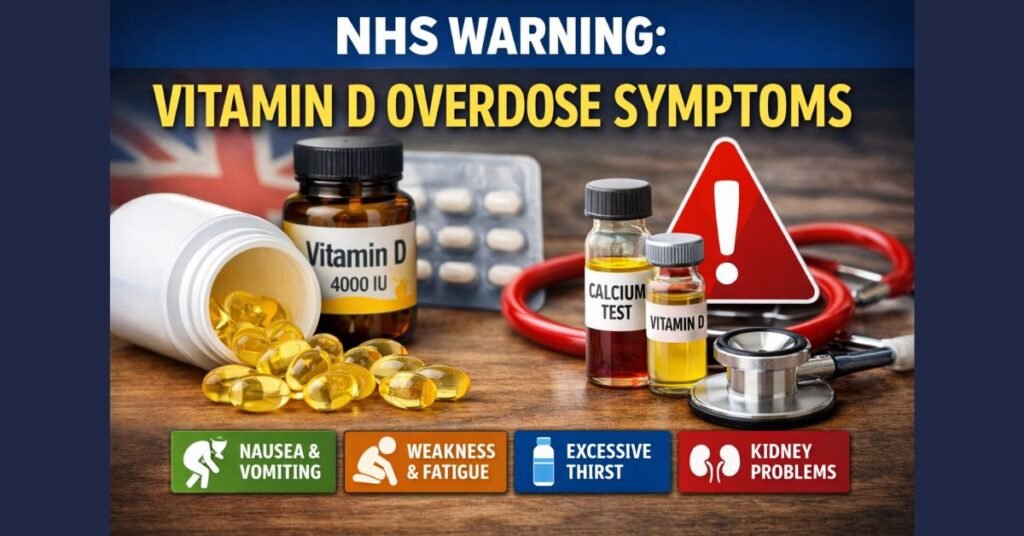
LONDON, United Kingdom — Health officials from the National Health Service have issued a safety alert for people taking vitamin D supplements, advising vigilance for signs of excessive intake after a rise in reported cases linked to high-dose use, according to NHS guidance and medical reports released Thursday. Experts said prolonged use of doses above recommended limits can lead to toxicity and serious health effects.
Vitamin D is widely recommended during autumn and winter months in the UK to support bone health and compensate for reduced sunlight, but taking amounts beyond official guidance can raise calcium levels in the blood, NHS clinicians said. Excessive intake is associated with symptoms including persistent nausea and vomiting, extreme fatigue and muscle weakness, frequent urination and excessive thirst, and, in severe cases, kidney dysfunction and confusion.
NHS England safety reviews have documented multiple instances where patients developed hypercalcaemia — elevated blood calcium — after self-administering high-strength vitamin D supplements for extended periods without medical supervision. Several cases required hospital treatment, with one person admitted for acute kidney injury linked to supplement overuse.
Clinicians reiterated that toxicity usually arises from “prolonged high-dose use” of over-the-counter supplements rather than from food or sunlight exposure, which do not lead to harmful levels of vitamin D. NHS guidance still recommends a daily intake of 10 micrograms (400 IU) for most adults in the autumn and winter and sets a maximum safe limit of 100 micrograms (4,000 IU) per day to avoid toxicity.
Medical authorities emphasize that people taking prescribed high-strength vitamin D should be monitored through regular blood tests to check calcium and vitamin D levels, and non-prescription users should adhere strictly to label directions or seek clinician advice before increasing dosage. Excessive calcium in the bloodstream can disrupt normal body functions, placing strain on kidneys and other organs.
Symptoms of vitamin D toxicity — also known as hypervitaminosis D — largely stem from hypercalcaemia and can mirror other conditions, underscoring the importance of medical assessment if signs like nausea, thirst, frequent urination, confusion or unexplained weakness develop during supplementation.
The NHS continues to include vitamin D supplementation in its seasonal health guidance for adults at risk of deficiency, while urging the public to follow recommended doses and consult health professionals before taking high-strength products.
ALSO READ: Dr. Martin Luther King Jr. Day Marked by Remembrance and Debate

Hannah Price is a digital journalist who covers breaking news, global events, and trending stories with accuracy and speed. She has previously contributed to several online magazines and has built a reputation for verifying facts before publishing. Hannah believes in responsible reporting and aims to present stories in a way that readers can trust.