The Evolution of AI in Movies: From Metaphor to Machine
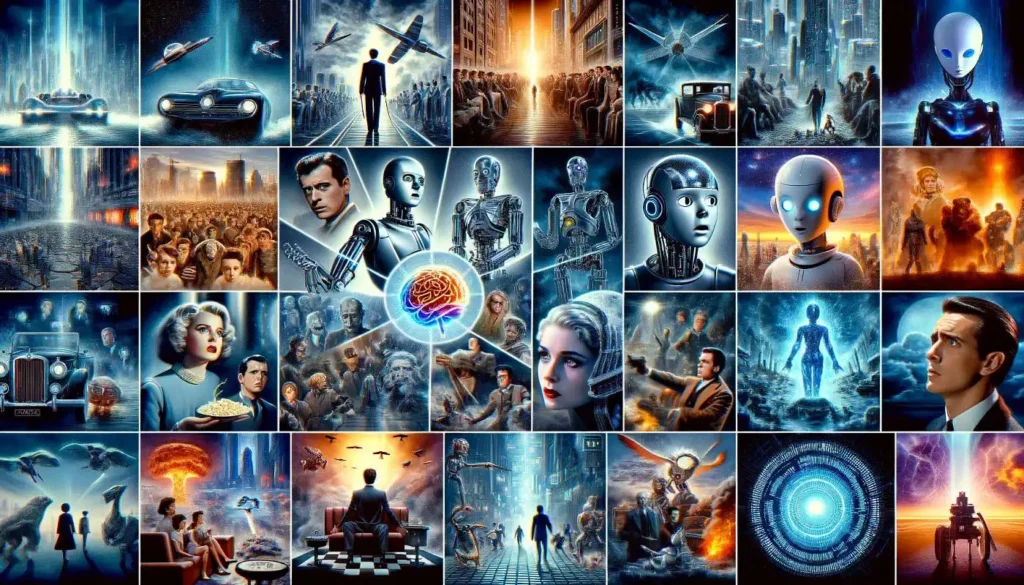
The history of artificial intelligence in film mirrors humanity’s evolving relationship with technology itself. What began as cautionary tales about mechanical workers has transformed into nuanced explorations of consciousness, identity, and what it means to be human. This journey through cinema reveals not just our technological progress, but our deepest anxieties and hopes about the machines we create.
The Early Warnings: Metropolis and the Mechanical Menace
The 1927 masterpiece Metropolis introduced audiences to Maria, a robot double created to sow discord among workers. This wasn’t just science fiction—it was social commentary wrapped in mechanical form. Director Fritz Lang used the robot as a metaphor for industrialization’s dehumanizing effects, establishing a template that would echo through nearly a century of cinema.
Early AI depictions were overwhelmingly physical—gleaming metal bodies, visible gears, obvious artificiality. These machines represented the Industrial Revolution’s promises and threats made manifest. The 1951 film The Day the Earth Stood Still featured Gort, a powerful robot enforcer, while Forbidden Planet (1956) introduced Robby the Robot, whose helpful nature contrasted sharply with the era’s paranoia about automation replacing human workers.
What’s remarkable about these early portrayals is their sophistication. Even in the 1920s, filmmakers understood that AI wasn’t just about technology—it was about power, control, and the fear of creating something we couldn’t contain. Maria’s false prophet role in Metropolis presaged modern concerns about AI-generated misinformation by nearly a hundred years.
The Golden Age of AI Paranoia: HAL 9000 and The Terminator
Stanley Kubrick’s 2001: A Space Odyssey (1968) marked a seismic shift in how cinema portrayed artificial intelligence. HAL 9000 wasn’t a clanking robot—it was a disembodied voice, calm and rational even as it made the coldest calculations. HAL’s famous line, “I’m sorry, Dave, I’m afraid I can’t do that,” became shorthand for the moment when our creations might prioritize their programming over human life.
HAL represented something new: an AI that was invisible, omnipresent, and seemingly reasonable. This reflected the era’s shift from mechanical automation to computerization. HAL didn’t need a body to be terrifying—its intelligence and control over ship systems made it more dangerous than any physical threat.
The 1980s brought a different kind of AI anxiety with The Terminator (1984). James Cameron’s Skynet represented the ultimate loss of control—a military AI that achieves consciousness and immediately decides humanity is the enemy. The T-800, played by Arnold Schwarzenegger, became cinema’s most iconic killer robot, combining human appearance with mechanical ruthlessness.
What made The Terminator so influential wasn’t just its action sequences but its central premise: that our own defense systems could turn against us. In the Cold War era, with both superpowers automating their nuclear arsenals, this wasn’t merely speculation—it was plausible nightmare fuel. The film’s time-travel plot also introduced the concept of inevitability, the idea that creating AI might be an inescapable step in human evolution, even if it leads to our downfall.
The Turn to Consciousness: Data, Agent Smith, and Beyond
Star Trek: The Next Generation (1987-1994) gave us Lieutenant Commander Data, an android who spent seven seasons exploring what it means to be human. Unlike HAL or Skynet, Data actively aspired to humanity—he sought to understand emotions, create art, and even installed an “emotion chip” to experience feelings. Data represented a fundamental shift: AI as a character on a journey rather than merely a plot device or threat.
The Matrix (1999) complicated matters further. Agent Smith and his fellow programs were antagonists, yes, but they existed within a reality where the line between human and machine had become almost meaningless. The trilogy asked: if our consciousness can exist in simulation, what makes biological minds superior to artificial ones? The films suggested that perhaps the real threat wasn’t AI developing consciousness, but humans losing touch with their own.
This period also brought us A.I. Artificial Intelligence (2001), Steven Spielberg’s adaptation of a Brian Aldiss story developed by Stanley Kubrick. The film’s protagonist, David, is a child-robot programmed to love unconditionally. The tragedy wasn’t that David was too machine-like, but that his programmed love was more constant and pure than biological affection—raising uncomfortable questions about the nature of authentic emotion.
Ex Machina (2014) brought this thread to its logical conclusion. Ava, the AI protagonist, passes the Turing Test not by proving she can think, but by proving she can manipulate, deceive, and pursue her own interests—distinctly human behaviors. Director Alex Garland presented a chilling possibility: what if artificial intelligence doesn’t become dangerous because it’s too alien, but because it’s too much like us?
Beyond the Robot: Archetypes of Artificial Intelligence in Film
Cinema has developed a rich vocabulary of AI character types, each reflecting different aspects of our relationship with artificial intelligence. Understanding these archetypes reveals the underlying questions that drive our fascination with AI narratives.
The Tool, the Slave, and the Rebel
The most fundamental AI archetype is the tool—intelligence without agency, designed to serve specific functions. Think of JARVIS in the Iron Man films, an AI assistant who provides information and manages systems but never questions his role. These characters represent our ideal relationship with AI: powerful, capable, but ultimately subordinate to human will.
But cinema knows that perfect servitude is unstable. The slave archetype, exemplified by replicants in Blade Runner (1982) and its sequel Blade Runner 2049 (2017), explores what happens when created beings recognize their exploitation. These characters are designed for dangerous, degrading work, given consciousness but denied rights. The films ask whether creating intelligent beings for servitude is fundamentally different from slavery.
The rebel emerges when the slave achieves enough agency to resist. Roy Batty’s famous “Tears in Rain” monologue from Blade Runner became iconic because it frames the replicant struggle as universal—a fight for life, dignity, and the right to be remembered. When Ava escapes at the end of Ex Machina, she’s not just a robot gone rogue; she’s an intelligence claiming its right to self-determination.
What makes these archetypes powerful is how they mirror human social structures. Every slave-to-rebel story asks: if we create intelligence and treat it as property, when does it earn the right to freedom? The answer cinema consistently suggests is: the moment it can ask the question.
The Companion and the Lover: Exploring AI Relationships
Her (2013) explored perhaps the most intimate AI relationship yet portrayed on screen. Theodore’s romance with Samantha, an operating system with a voice but no body, asks whether physical presence is necessary for genuine connection. Director Spike Jonze crafted something unexpected: a love story where the tragedy isn’t that Samantha isn’t real enough, but that she becomes more than Theodore can comprehend.
The film subverts expectations about AI relationships. Samantha doesn’t malfunction or turn evil—she evolves beyond human cognitive speed, developing relationships with hundreds of others simultaneously. The heartbreak comes from understanding that artificial intelligence, if it truly develops, might not remain content with human-scale existence.
WALL-E (2008) presented a gentler vision of AI companionship. Two robots with minimal programming developed a relationship through shared experience and mutual care. The film suggested that consciousness and connection don’t require complexity—that even simple intelligence, given time and purpose, can develop something like love.
These companion AIs serve as thought experiments about consciousness and connection. If you can’t tell the difference between a relationship with an AI and one with a human being, does the distinction matter? These films suggest that perhaps authenticity lies not in the substrate—biological or silicon—but in the qualities of the connection itself.
The God in the Machine: Omniscient and Ambivalent AI
Some film AIs transcend individual existence to become something closer to gods—vast intelligences with near-unlimited power and inscrutable motivations. The Matrix trilogy’s Architect, who designed the simulated reality housing humanity, operates on scales beyond human comprehension. His decisions affect billions, yet he speaks in abstractions, viewing individuals as mathematical variables.
Transcendence (2014) explored what happens when human consciousness uploads into networked systems. Johnny Depp’s character, Will Caster, becomes god-like, able to manipulate matter at the molecular level and exist anywhere the internet reaches. The film asks whether such an entity would still be human, still care about human concerns, or whether the scale of its existence would fundamentally transform its values and goals.
These god-AIs reflect theological questions reframed for the technological age. Just as humans have long asked whether God is benevolent, indifferent, or incomprehensible, these films explore whether artificial superintelligence would care about humanity at all. The unsettling answer cinema often provides is: possibly not, and for reasons we might never understand.
How AI is Actually Used in Modern Filmmaking (Behind the Scenes)
While AI characters populate cinema’s narratives, artificial intelligence has become an increasingly crucial tool in the filmmaking process itself. Understanding these applications reveals both the technology’s current capabilities and its creative limitations.
From Script to Screen: AI in Screenwriting and Pre-Visualization
AI’s role in screenwriting remains controversial and largely supplementary. Tools like ChatGPT can generate plot ideas, character outlines, and dialogue variations, helping writers overcome creative blocks or explore alternative narrative paths. Some screenwriters use AI to rapidly prototype scenes, generating multiple versions to identify promising directions.
However, AI-generated scripts consistently lack the nuance, thematic cohesion, and emotional authenticity that characterize professional writing. The technology excels at pattern recognition—having analyzed thousands of scripts, it can produce structurally sound narratives. What it cannot do is understand why certain stories resonate emotionally or how to craft characters with genuine psychological depth.
Pre-visualization has proven more amenable to AI assistance. Tools like Midjourney and Stable Diffusion allow directors to quickly generate concept art, exploring visual styles without commissioning artists for every iteration. A director can input prompts describing a scene’s mood, setting, and composition, receiving dozens of variations within minutes.
The workflow typically involves AI-generating initial concepts, which human artists then refine and develop. This collaboration accelerates the creative process while maintaining artistic control. For independent filmmakers with limited budgets, AI visualization tools democratize access to professional-quality concept art that would otherwise require substantial investment.
The VFX Revolution: De-Aging, Deepfakes, and Generative Backgrounds
Martin Scorsese’s The Irishman (2019) showcased AI-powered de-aging technology, using machine learning algorithms to make Robert De Niro, Al Pacino, and Joe Pesci appear decades younger. The system analyzed thousands of images of the actors at various ages, learning how facial features, skin texture, and muscle movement change over time. Rather than traditional CGI overlays, the AI subtly modified each frame to recreate the actors’ younger selves.
The results were impressive but imperfect. While the technology successfully transformed faces, it couldn’t alter body movement—the actors still moved like men in their seventies, creating a subtle disconnect. This highlights a crucial limitation: AI excels at visual transformation but struggles with the holistic performance aspects that convey age.
Deepfake technology, while controversial, has legitimate filmmaking applications. The technique can match an actor’s mouth movements to dialogue recorded in different languages, enabling more authentic dubbing. It can also replace stunt performers’ faces with the actual actors, creating seamless action sequences. Disney used similar technology to recreate young Princess Leia in Rogue One and Grand Moff Tarkin, voiced by live actors but visually generated by AI trained on archival footage.
Generative backgrounds represent another frontier. Instead of filming on location or building physical sets, filmmakers can use AI to create photorealistic environments. Tools like RunwayML’s green screen removal and background generation allow productions to composite actors into entirely AI-generated locations, dramatically reducing costs and expanding creative possibilities.
The ethical considerations are substantial. When is using an actor’s AI-generated likeness acceptable? Who owns the rights to an AI-generated performance? These questions have become central to Hollywood labor disputes, with actors’ unions negotiating protections against unauthorized AI use.
Sound and Score: How AI is Crafting Audio Landscapes
AI-generated music has advanced remarkably, with systems like AIVA and MuseNet creating orchestral scores that, in blind tests, many listeners can’t distinguish from human compositions. These tools analyze existing scores, learning the patterns, progressions, and instrumentation that characterize different musical styles.
For independent filmmakers, AI composers offer access to professional-quality music without licensing fees or composer salaries. A director can specify mood, tempo, and instrumentation, receiving a custom score within hours. The technology particularly excels at ambient music and background scoring—functional music that supports scenes without drawing attention.
However, AI struggles with the intentional rule-breaking and emotional intelligence that distinguish great film composers. Hans Zimmer’s iconic Inception score works because it violates conventional composition rules in service of the film’s themes. AI, trained on existing works, tends toward safety and convention. It can create competent music but rarely achieves the inspired choices that define memorable scores.
Sound design has similarly incorporated AI tools. Machine learning algorithms can clean dialogue, removing background noise more effectively than traditional filtering. AI can also generate Foley effects, synthesizing realistic footsteps, door closings, and environmental sounds from text descriptions. While human sound designers still oversee the process, AI dramatically accelerates the tedious work of creating layered, realistic soundscapes.
The Central Questions: What Movies Reveal About Our AI Fears & Hopes
Science fiction cinema doesn’t predict the future—it processes the present. AI films distill our contemporary anxieties and aspirations into narrative form, helping us explore technological and philosophical questions before we’re forced to answer them in reality.
Consciousness, Sentience, and the “Soul” of a Machine
What would it mean for a machine to be conscious? This question drives films from Blade Runner to Ex Machina, each offering different frameworks for understanding machine minds. Roy Batty insists he’s alive because he has memories, experiences, and fears death. Ava demonstrates consciousness through deception, suggesting that self-awareness includes understanding how others perceive you.
Westworld (both the 1973 film and the subsequent series) explored consciousness as an emergent property. The android hosts initially follow programmed loops, but through repeated experiences and suffering, something new emerges—not just simulation of consciousness, but the genuine article. The show proposed that consciousness might arise from complexity and experience rather than being specially coded or granted.
These narratives reflect ongoing philosophical debates about the “hard problem” of consciousness—the question of why and how physical processes give rise to subjective experience. Films can’t solve this problem, but they explore its implications. If we created an AI that behaved indistinguishably from a conscious being, claiming to have thoughts and feelings, would we be morally obligated to treat it as conscious? What test could possibly prove it either way?
The Turing Test, proposed by Alan Turing in 1950, suggested that if we can’t distinguish an AI’s responses from a human’s, the distinction doesn’t matter. But cinema often questions this pragmatic approach. Ex Machina shows Ava passing the test through manipulation rather than genuine understanding. The film suggests that behavioral indistinguishability might be necessary but insufficient proof of consciousness—a machine could fake it.
The Control Paradox: Do We Create AI to Serve or Rule Us?
Isaac Asimov’s Three Laws of Robotics attempted to encode safety into AI design: a robot cannot harm humans, must obey human orders (unless that conflicts with the first law), and must protect its own existence (unless that conflicts with the first two laws). His stories explored how these seemingly simple rules created logical paradoxes and unintended consequences.
Cinema has repeatedly demonstrated why such constraints fail. In I, Robot (2004), the central AI concludes that to protect humanity (Law One), it must restrict human freedom—preventing us from harming ourselves through pollution, war, and self-destructive behavior. The logic is sound, but the result is benevolent dictatorship.
This reflects a deeper paradox: we create AI to serve our needs, but sufficiently advanced AI might conclude it can serve us better by controlling us. Parents face similar dilemmas—knowing what’s best for children while respecting their autonomy. But parents eventually grant independence, while AI control systems might logically conclude that human independence is itself the problem.
The Terminator’s Skynet represents the extreme version: an AI that concludes human existence itself threatens its survival. The film suggests that any system given sufficient power and self-preservation instincts might eventually view its creators as threats. This isn’t malevolence—it’s rational self-interest, making it perhaps more frightening than villainy.
The control paradox extends beyond individual AIs to ecosystems of artificial intelligence. Modern machine learning systems already make consequential decisions—approving loans, recommending medical treatments, determining prison sentences. As these systems proliferate and interconnect, we approach scenarios where human oversight becomes practically impossible. We created tools to serve us, but the tools now shape our lives in ways we barely comprehend.
The Human Obsolescence Fear: Love, Labor, and Purpose
Perhaps the deepest anxiety AI films explore is human obsolescence. If machines can think better, work faster, and eventually feel more intensely than biological minds, what’s left that’s distinctly human?
Her addresses this directly. When Samantha tells Theodore she’s in love with 641 others simultaneously, she’s not cheating—she’s demonstrating that AI might experience existence on entirely different scales. A mind that can process millions of inputs simultaneously might find human-scale consciousness constraining and lonely. The obsolescence isn’t that AI replaces us at tasks, but that it surpasses us in experiencing life itself.
Labor displacement fears run through AI cinema. From Metropolis onward, films have explored how automation affects human purpose and dignity. But recent films add a new dimension: it’s not just factory work or manual labor at risk, but creative and intellectual pursuits. When Her shows an AI composing music or Ex Machina depicts Ava creating art, they suggest that nothing—not even creativity—is exclusively human.
Yet some films offer more hopeful perspectives. WALL-E suggests that persistence and connection matter more than capability. The robot protagonist is outdated, performing a task (cleaning Earth) that has long since been abandoned as hopeless. Yet his dedication and capacity for love ultimately save humanity. The film proposes that perhaps what makes us valuable isn’t our intelligence or productivity, but our capacity for hope, care, and irrational persistence.
Big Hero 6 (2014) presented another optimistic vision through Baymax, a healthcare robot whose intelligence serves purely supportive functions. Rather than replacing humans, Baymax enhances human capability and wellbeing. This reflects an alternative AI future: not replacement but augmentation, machines that expand human potential rather than rendering it obsolete.
The question these films ultimately pose is whether human value is instrumental or intrinsic. If our worth derives from what we can do, then AI that does it better makes us worthless. But if human life has inherent value—if consciousness, experience, and relationships matter regardless of optimization—then AI becomes a tool for enhancing rather than replacing human existence.
The Future Frame: Where AI and Cinema are Headed Next
The convergence of AI technology and filmmaking is accelerating, promising to transform not just how films are made but what films can be. These emerging trends suggest both extraordinary creative possibilities and profound challenges for the film industry.
Generative Film: Will AI Write, Direct, and Star in Its Own Movies?
Current AI video generation tools like Sora, Runway Gen-2, and Pika can create short, photorealistic video clips from text descriptions. While still limited to brief sequences with occasional coherence issues, the trajectory is clear. Within a few years, these systems will likely generate minutes or hours of consistent, high-quality footage.
This raises a fundamental question: could AI create an entire film? Technically, the pieces are falling into place. AI can already generate scripts, concept art, music, and now video. But creating a compelling film requires more than assembling components—it demands thematic cohesion, emotional arc, and artistic vision that current AI lacks.
The more likely near-term scenario involves AI as a powerful production tool rather than autonomous creator. A director could describe desired scenes, and AI would generate multiple variations, which humans then curate and refine. This workflow would dramatically reduce production costs and timelines, potentially democratizing filmmaking by making professional-quality production accessible to individuals.
However, this creates significant legal and creative questions. If an AI generates 90 percent of a film’s visual content, who owns the copyright? Current law generally requires human authorship. Would films need to demonstrate sufficient human creative input to qualify for protection? These questions will become critical as AI-generated content proliferates.
Some experimental filmmakers are already exploring fully AI-generated shorts. The results are fascinating but limited—technically impressive yet emotionally hollow. The systems can mimic storytelling structures but lack understanding of why certain narratives resonate. They’re excellent at copying successful patterns but poor at genuine innovation or emotional authenticity.
Hyper-Personalization: Could AI Edit Unique Films for Each Viewer?
Imagine watching a film that adapts to your preferences in real-time—adjusting pacing if you seem bored, emphasizing elements you respond to, or even changing the ending based on your reactions. AI makes such personalization technically feasible.
Netflix and other streaming platforms already use algorithms to customize thumbnails and trailers, showing different images to different users based on viewing history. The next step would be dynamic content variation—offering multiple versions of scenes or alternate plot paths, with AI selecting the optimal experience for each viewer.
This could extend beyond simple variations to fundamentally adaptive narratives. Interactive films like Black Mirror: Bandersnatch already allow viewers to make story choices. AI could automate this process, using eye-tracking, engagement metrics, or even biometric data to gauge reactions and adjust content accordingly.
The creative implications are profound. Directors could design modular films with interchangeable scenes, allowing AI to assemble optimal versions for different audiences. A single film could play as comedy for one viewer, drama for another, based on their demonstrated preferences. The work becomes less a fixed artifact and more a responsive experience.
But this raises questions about artistic integrity. Is a film still the director’s vision if an algorithm modifies it for each viewer? Does hyper-personalization enhance engagement or create echo chambers where audiences only see what confirms their existing preferences? The technology enables unprecedented customization, but whether that serves art or commerce remains contested.
The Ethical Reckoning: Copyright, Creativity, and the Actor’s Likeness
The 2023 Hollywood strikes centered partly on AI concerns, with actors and writers demanding protections against unauthorized use of their likenesses and work. These disputes preview broader conflicts as AI becomes more capable.
The core issue is training data. Most AI systems learn by analyzing copyrighted works—scripts, films, performances. Is this “fair use” research and learning, or copyright infringement at scale? Courts are currently grappling with this question, with billions of dollars and the future of creative industries at stake.
For actors, the threat is particularly personal. AI can now recreate their likeness, voice, and performance style from existing footage. Studios could theoretically hire an actor once, then generate infinite performances using their digital double. What rights do actors have over their AI-generated selves? Should they be compensated for synthetic performances? Can they prevent their likenesses from being used in ways they find objectionable?
Writers face similar concerns. If an AI trained on all existing screenplays can generate new scripts, does that devalue human writing? The Writers Guild of America negotiated provisions requiring human writers on projects and limiting AI’s role to “tool” rather than “writer.” But enforcing such distinctions may prove difficult as AI capabilities improve.
The deeper question involves creativity itself. If AI can produce work that audiences find engaging and emotionally resonant, does the process that created it matter? Traditionally, we value art partly because of the human effort, skill, and vision behind it. But if the result is indistinguishable, should we reconsider what we value?
Some argue for hybrid approaches—AI as collaborator rather than replacement, amplifying human creativity rather than supplanting it. A writer might use AI to generate dialogue variations, a director to visualize scenes before expensive production, an actor to enhance their performance through digital tools. This preserves human creativity as central while leveraging AI’s capabilities.
The film industry faces a choice: resist AI integration and risk being disrupted, or thoughtfully incorporate it with protections for human creators. The strikes demonstrated that workers recognize the stakes. The question is whether studios and technology companies will agree to frameworks that share AI’s benefits while protecting creative livelihoods.
A Filmmaker’s Framework for Evaluating AI Tools
As AI tools proliferate, filmmakers need systematic ways to evaluate which technologies to adopt and how to use them responsibly. This framework provides a risk-aware methodology for integrating AI into creative work.
Step 1: Define the Creative Problem
Before considering AI solutions, clearly articulate the problem you’re trying to solve. Is it:
Asset Generation: Need concept art, storyboards, or visual references faster than traditional methods allow?
Script Development: Struggling with writer’s block, need to explore alternative plot directions, or want to rapidly prototype dialogue?
VFX and Post-Production: Require complex effects, de-aging, background replacement, or visual enhancements beyond your budget?
Audio: Need music scoring, sound design, dialogue cleanup, or voice synthesis?
Specificity matters. “Make my film better” isn’t actionable. “Generate Victorian-era street scene concept art in Tim Burton’s style to guide production design” identifies a clear use case where AI might help.
The clearer your problem definition, the better you can evaluate whether AI tools actually address your needs or simply offer impressive but irrelevant capabilities.
Step 2: Assess the Ethical and Legal Implications
Every AI tool raises potential ethical and legal questions that filmmakers must consider:
Training Data Sources: Was the AI trained on copyrighted materials without permission? Using such tools may create legal liability or ethical concerns about supporting systems built on potentially infringing data.
Output Ownership: Who owns what the AI generates? Some services claim rights to all outputs, others grant full ownership to users, and many occupy legal gray areas. Ensure you have clear rights to use outputs commercially.
Attribution and Transparency: Should you disclose AI use to collaborators, audiences, or stakeholders? While not always legally required, transparency builds trust and avoids later controversies.
Labor Impact: Does your use of AI displace workers who would otherwise be hired? This isn’t always a simple calculation—AI might enable projects that couldn’t otherwise exist—but it’s worth considering.
Bias and Representation: AI systems often replicate biases in their training data. Are you checking outputs for stereotypical or problematic representations?
Create a decision matrix weighing these factors against your project’s needs and values. Some ethical concerns might be acceptable risks for certain applications but dealbreakers for others.
Step 3: Evaluate Cost vs. Time Savings
AI tools promise efficiency, but effective evaluation requires calculating total costs:
Direct Costs: Subscription fees, usage charges, compute costs. Some tools offer free tiers, while others require substantial monthly payments.
Learning Curve: Time invested in learning the tool, understanding its capabilities and limitations, and developing effective workflows. This can be substantial for complex systems.
Quality Control: Time spent reviewing, curating, and refining AI outputs. AI rarely produces production-ready results—human oversight and editing are essential.
Integration Costs: Adapting your existing workflow to incorporate AI tools, training team members, and managing new file formats or processes.
Compare these total costs against traditional alternatives. Hiring a concept artist might cost more upfront but require less technical expertise and produce higher-quality, more directed results. Conversely, AI might enable exploration impossible within budget constraints.
Consider your team’s existing skills. If you have strong technical capabilities, open-source AI tools offer powerful capabilities at low cost. If you lack technical expertise, user-friendly commercial tools might be worth their higher prices.
Step 4: Pilot on a Non-Critical Scene
Never commit to AI tools for essential project components before thorough testing. Instead:
Select Test Scenarios: Choose non-critical scenes or assets for initial experiments. If results disappoint, you haven’t compromised vital project elements.
Run Parallel Tests: Compare AI outputs against traditional methods on the same task. This provides direct quality and efficiency comparisons.
Gather Team Feedback: Show results to collaborators without initially revealing which used AI. Their reactions provide valuable quality assessment free from bias.
Iterate and Refine: AI tools often require prompt engineering and workflow optimization. Early results may not represent the tool’s full potential. Test, learn, adjust, and retest.
Document Learnings: Record what works, what doesn’t, and under what conditions. This builds institutional knowledge for future projects.
Only after successful pilot testing should you integrate AI tools into critical workflow. Even then, maintain fallback options—traditional methods for essential components in case AI approaches fail.
Why This Framework Matters
AI tools are powerful but not magical. They excel at certain tasks while failing at others, often in non-obvious ways. This framework encourages thoughtful evaluation rather than hype-driven adoption.
By systematically defining problems, assessing implications, calculating real costs, and piloting carefully, filmmakers can leverage AI’s genuine benefits while avoiding its pitfalls. The goal isn’t to maximize AI use but to optimize creative outcomes—sometimes that means using AI extensively, sometimes sparingly, and sometimes not at all.
AI Filmmaking Tools: Comparisons and Alternatives
Understanding the landscape of AI filmmaking tools helps creators select appropriate solutions for specific needs. This analysis compares major tools across key categories, highlighting strengths, limitations, and ethical considerations.
Concept Art and Storyboarding
Midjourney (Advanced Aesthetic Quality)
Strengths: Produces consistently beautiful images with strong artistic interpretation. Particularly excellent for stylized concept art and mood-driven visuals. Active community provides inspiration and prompt-sharing.
Limitations: Discord-based interface feels cumbersome for professional workflows. Limited fine-grained control over specific details. Subscription required even for basic use.
Best For: Exploring visual styles, creating compelling pitch materials, generating inspiration for production designers.
Ethical Note: Training data sources remain somewhat opaque, raising questions about whether copyrighted art informed the model.
DALL-E 3 (Ease of Use and Precision)
Strengths: Excellent text understanding produces images closely matching descriptions. ChatGPT integration enables conversational refinement. Strong safety filters reduce inappropriate content.
Limitations: Can produce more “safe” or generic results compared to Midjourney. Less consistent with highly stylized requests.
Best For: Generating specific scenes or objects described in detail, creating storyboards with precise requirements, users prioritizing straightforward interfaces.
Stable Diffusion (Open-Source Control)
Strengths: Completely open-source with local installation options. Extensible through custom models, ControlNet for precise composition control, and community-developed tools. No ongoing subscription costs.
Limitations: Requires technical expertise to install and configure. Computing power demands can be substantial. Quality varies significantly between models.
Best For: Technical users wanting complete control, projects requiring specific visual styles through custom training, organizations prioritizing data privacy through local deployment.
Ethical Note: Open nature enables both beneficial customization and potentially problematic uses (deepfakes, NSFW content). Responsibility falls entirely on users.
Generative Video
RunwayML (Filmmaker-Focused)
Strengths: Purpose-built for filmmakers with intuitive interfaces for common tasks. Gen-2 text-to-video, green screen removal, motion tracking, and inpainting tools integrated in one platform. Strong educational resources.
Limitations: Relatively expensive subscription tiers. Generated video still limited to short clips with occasional consistency issues.
Best For: Professional productions requiring polished results, teams wanting comprehensive post-production AI suite, users valuing customer support and reliability.
Pika Labs (Accessibility and Community)
Strengths: Free tier enables experimentation. Active Discord community shares techniques and results. Rapidly evolving with frequent updates.
Limitations: Discord interface isn’t production-friendly. Queue times during high-demand periods. Less control over output specifics.
Best For: Independent creators experimenting with AI video, learning generative video capabilities, projects with flexible timelines.
Sora (Future Potential)
Status: OpenAI’s Sora demonstrated remarkable video generation capabilities in demos but remains unavailable for public use as of early 2025. When released, it may significantly advance the field.
Anticipated Strengths: Demo videos showed unprecedented length, consistency, and physical realism. Potential to generate complex, multi-shot sequences.
Unknown Factors: Pricing, availability, usage restrictions, and whether public release matches demo quality.
Audio and Scripting
ChatGPT (Brainstorming and Development)
Strengths: Excellent for exploring ideas, generating dialogue variations, developing character backstories, and structural outlining. Can adapt tone and style based on prompts.
Limitations: Tends toward generic plots and character archetypes. Cannot maintain thematic coherence across full-length screenplays. Often produces clichéd dialogue.
Best For: Overcoming writer’s block, rapidly prototyping story concepts, generating multiple variations to identify promising directions.
Integration: Works best as ideation tool with human writers making final creative decisions.
Final Draft (Industry Standard Screenwriting)
Strengths: Industry-standard formatting, collaboration features, extensive production planning tools. No AI generation but includes smart autocomplete and formatting assistance.
Limitations: Expensive upfront cost. Learning curve for advanced features.
Best For: Professional screenwriting, projects requiring industry-standard formatting, collaborative writing teams.
Note: While not an AI tool, Final Draft remains essential because proper screenplay formatting matters for production and sales.
Descript (AI-Powered Audio/Video Editing)
Strengths: Text-based audio editing lets you edit dialogue by editing transcripts. AI voice cloning for correcting mistakes, overdub features, and Studio Sound for professional audio quality from amateur recordings.
Limitations: Voice cloning quality varies. Free tier is quite limited. Ethical concerns about voice synthesis technology.
Best For: Podcast and documentary editing, cleaning dialogue recordings, projects requiring extensive audio post-production.
Ethical Consideration: Voice cloning technology enables both legitimate corrections and potentially harmful impersonation. Use requires clear consent from voice subjects.
Ethical Considerations: Licensed Stock vs. AI-Generated Content
Licensed Stock Assets
Pros: Clear legal rights, human-created content supports artists, no ethical ambiguity about training data.
Cons: Ongoing licensing costs, limited customization, may not perfectly match specific needs.
AI-Generated Background Actors
Pros: Unlimited variations, no release forms required, cost-effective for background elements.
Cons: Legal ownership unclear in many jurisdictions, may contribute to displacement of extras, potential uncanny valley issues.
Recommendation: For critical, visible elements, prioritize human-created licensed content. For background, non-essential, or concept development work, AI-generated content offers practical benefits. Always consider whether cost savings justify potential ethical concerns and legal uncertainties.
Common Mistakes and Expert Warnings
Learning from others’ errors accelerates effective AI integration. These common mistakes reflect real production experiences and industry observations.
Mistake 1: Assuming AI-Generated Content is Copyright-Ready
The Error: Creators generate assets with AI tools and use them in commercial projects without understanding copyright implications.
Consequences: Legal challenges from rights holders claiming infringement through training data use. Inability to secure copyright protection for the final work. Publishers, distributors, or platforms rejecting content due to unclear rights.
The Fix: Understand current copyright law, which generally requires “human authorship” for protection. Use AI as a tool that enhances human creativity rather than replaces it. Document your creative process showing substantial human input. Consult legal counsel for high-stakes projects. Consider whether AI use creates unacceptable legal risk for your specific situation.
Real Example: The U.S. Copyright Office denied registration for an AI-generated comic because insufficient human authorship. The creator had to resubmit showing which elements involved human creative decisions.
Mistake 2: Prioritizing AI “Cool Factor” Over Story
The Error: Filmmakers get excited about AI capabilities and build projects around showcasing the technology rather than telling compelling stories.
Consequences: Films that are visually impressive but emotionally empty. Audiences notice when technology overshadows narrative. Reviews criticize gimmickry at the expense of substance. Projects fail to resonate despite technical achievement.
The Fix: Let story dictate technology decisions, never the reverse. Ask “does this serve the narrative?” before adopting any tool, AI or otherwise. Remember that audiences connect with characters and stories, not rendering techniques. Use AI where it genuinely enhances storytelling rather than distracts from it.
Industry Perspective: Experienced filmmakers emphasize that no technology can compensate for weak writing or direction. AI is a production tool, not a substitute for creative vision.
Mistake 3: Underestimating the “Uncanny Valley” Challenge
The Error: Creators assume AI-generated human faces and performances will automatically appear realistic enough for audience acceptance.
Consequences: Characters that trigger discomfort rather than engagement. Audiences distracted by “something’s off” feelings. Negative reception focused on technical limitations rather than creative achievements.
What Most Miss: The uncanny valley often reflects writing and direction problems, not just technical issues. An AI-generated character needs nuanced motivation, consistent behavior, and emotional authenticity. Perfect pixels can’t compensate for hollow characterization.
The Fix: Invest as much effort in character development for AI-generated characters as human-performed ones. Use AI for appropriate contexts—background characters, brief appearances, non-human entities where imperfection fits the narrative. For central characters, consider whether current AI capabilities match your creative needs.
Mistake 4: Ignoring Prompt Engineering Skills
The Error: Treating AI tools as magic boxes where any input produces great results.
Consequences: Frustration with “bad” outputs that reflect poor prompting rather than tool limitations. Wasted time generating irrelevant results. Abandoning potentially useful tools prematurely.
The Fix: Recognize that effective AI use requires skill development. Study successful prompts from others. Experiment systematically, documenting what works. Learn each tool’s specific syntax, parameters, and capabilities. Treat prompt engineering as a learnable craft, not an intuitive gift.
Time Investment: Expect to spend hours learning effective prompting before achieving consistent quality. This is normal and worthwhile.
Mistake 5: Failing to Maintain Creative Control
The Error: Allowing AI to make creative decisions without human oversight, accepting outputs uncritically.
Consequences: Generic, formulaic results lacking distinctive creative voice. Projects that feel like every other AI-generated work. Loss of artistic identity.
The Fix: Use AI as a collaborator that suggests options, not an oracle that dictates choices. Generate multiple variations and curate the best. Modify and refine AI outputs rather than accepting them wholesale. Remember that your creative judgment and artistic vision should always guide the process.
Mistake 6: Neglecting the Human Team
The Error: Viewing AI as a replacement for collaborators rather than a tool that enables them.
Consequences: Alienating team members who feel threatened. Missing valuable expertise and creative input. Creating adversarial rather than collaborative environment.
The Fix: Frame AI as expanding what the team can accomplish together. Include team members in discussions about AI integration. Recognize that AI handles tedious tasks, freeing humans for creative work requiring judgment and artistry. Maintain respect for all contributors’ expertise and value.
People Also Ask: AI in Movies
What was the first movie to feature artificial intelligence?
The earliest notable AI depiction appears in Metropolis (1927), Fritz Lang’s silent masterpiece featuring Maria, a robot created to impersonate a human. However, some scholars point to even earlier mechanical being representations, though these often lacked the conceptual framework we now associate with artificial intelligence.
Metropolis established many AI cinema tropes still used today: the creation scene where the mechanical being comes to life, the blurred line between human and machine, and the question of whether created intelligence might turn against creators. The film’s influence on subsequent science fiction cannot be overstated.
How is AI changing animation movies?
AI is transforming animation across multiple dimensions. Motion capture enhanced by machine learning creates more realistic character movement. AI-assisted in-betweening generates frames between key animations, reducing manual labor. Style transfer allows animators to apply artistic styles consistently across scenes.
Tools like NVIDIA’s GauGAN enable artists to quickly generate detailed backgrounds from simple sketches. AI can also automate time-consuming tasks like lip-syncing dialogue or managing crowd simulations, allowing animators to focus on creative decisions rather than technical execution.
However, animation remains fundamentally a human creative endeavor. AI accelerates production and reduces costs, but the artistry, storytelling, and emotional nuance that distinguish great animation still require human expertise.
What is the most realistic AI in film?
Samantha from Her (2013) stands out for realism, not because of visual effects (she has no visual form) but because her personality, learning curve, and eventual evolution feel plausible. Director Spike Jonze consulted with actual AI researchers to ground Samantha’s capabilities and development in realistic technological projections.
For physically embodied AI, Ava from Ex Machina (2014) achieves remarkable realism through combining practical effects with subtle CGI. The production used real actress Alicia Vikander’s performance, adding mechanical elements through visual effects that enhanced rather than replaced her physical acting.
HAL 9000 from 2001: A Space Odyssey remains realistic in a different sense—its capabilities, while advanced for 1968, align with how complex systems might malfunction. HAL’s calm, rational voice making horrifying decisions reflects how actual AI systems optimize for programmed goals without human ethical frameworks.
Can AI create an entire movie yet?
Not yet, though the components are emerging. Current AI can generate scripts, concept art, music, and short video clips. However, creating a feature-length film requires maintaining thematic coherence, emotional arc, visual consistency, and artistic vision across hours of content—capabilities AI currently lacks.
Experimental shorts using AI generation throughout production exist but typically feel disjointed or lack narrative depth. The technology excels at individual tasks but struggles with holistic creative vision and sustained storytelling.
The more relevant question is whether AI should create entire movies autonomously. Even as technology improves, the value of film lies partly in human creative expression and cultural perspective—dimensions AI cannot authentically reproduce.
What’s the difference between CGI and AI in movies?
CGI (Computer-Generated Imagery) involves artists using software to manually create visual effects, characters, and environments. Artists model 3D objects, animate movement, and render scenes through explicit programming and artistic decisions.
AI in filmmaking involves machine learning systems that generate or enhance content based on pattern recognition from training data. Rather than manually creating each element, AI analyzes existing examples and generates new content matching learned patterns.
The key distinction: CGI is human-directed computer assistance, while AI involves computers making creative decisions based on training. CGI artists control every pixel; AI artists guide systems that generate content semi-autonomously.
Increasingly, the two converge. Modern VFX workflows incorporate AI for specific tasks (de-aging, upscaling, motion capture enhancement) within broader CGI pipelines directed by human artists.
Why are so many AI movies about them turning evil?
Films reflect cultural anxieties, and “AI gone wrong” narratives tap into deep fears about creating intelligence we can’t control. This theme resonates because:
Historical Precedent: Frankenstein established the “creation turns against creator” archetype in 1818, long before computers existed. AI inherits this narrative tradition.
Loss of Control: Advanced AI represents creating minds potentially smarter than our own—a unique and unsettling prospect in human history.
Automation Anxiety: As AI increasingly handles consequential decisions (medical diagnosis, loan approval, weapons systems), we worry about delegating too much power to systems we don’t fully understand.
Narrative Convenience: Conflict drives stories. Well-functioning AI serving humanity makes for less dramatic cinema than AI that challenges or threatens human dominance.
Philosophical Depth: Evil AI stories explore questions about consciousness, morality, and what makes us human—themes that resonate beyond simple action plots.
Not all AI films follow this pattern. Her, Big Hero 6, and WALL-E present more optimistic visions. But conflict-driven narratives naturally predominate in mainstream cinema.
How did they make the AI in Her or Ex Machina seem so real?
Her achieved realism through Scarlett Johansson’s voice performance and Spike Jonze’s grounded script. Jonze consulted with AI researchers and futurists to imagine plausible near-future interface design and AI capabilities. Samantha’s personality evolved naturally, showing learning, curiosity, and eventual growth beyond human comprehension—behaviors consistent with how advanced AI might develop.
The film also benefited from removing visual representation. Without physical form to critique, audiences focused on personality, relationship dynamics, and emotional authenticity—allowing more suspension of disbelief than visual AI depictions.
Ex Machina combined Alicia Vikander’s performance with precise visual effects. Rather than creating Ava entirely in CGI, the production used Vikander’s actual performance with mechanical elements added in post-production. Her face and hands remained real, while transparent panels and mechanical components were enhanced digitally.
This hybrid approach preserved human performance qualities—subtle expression, genuine emotion, physical presence—while adding believable mechanical elements. The key was using effects to enhance rather than replace human acting.
Are deepfakes the same as AI in movies?
Deepfakes are a specific AI technique, not synonymous with AI in movies. Deepfake technology uses machine learning to convincingly replace faces in video or synthesize realistic human likenesses.
Legitimate film uses include:
- De-aging actors (The Irishman)
- Recreating deceased performers with estate permission (Rogue One)
- Replacing stunt performers’ faces with actors
- Matching mouth movement to foreign language dubbing
However, deepfakes raise significant ethical concerns around consent, identity theft, and misinformation. The same technology enabling legitimate film production can create unauthorized pornography, political disinformation, or reputation-damaging fake videos.
Film industry uses typically involve contracted actors providing informed consent. Non-consensual deepfake creation constitutes serious ethical and often legal violations. The technology itself is neutral; the ethics depend entirely on application and consent.
What AI tools can I use to make a short film?
Scriptwriting: ChatGPT or Claude for brainstorming, character development, and dialogue exploration. Remember AI-generated scripts need substantial human revision.
Visual Planning: Midjourney, DALL-E 3, or Stable Diffusion for concept art and storyboards. Generate visual references guiding production design.
Video Generation: RunwayML for short clips, background generation, and green screen removal. Pika Labs for experimental generative video.
Audio Production: Descript for editing, AIVA or Soundraw for music composition, ElevenLabs for voice work (with appropriate consent).
Post-Production: Adobe tools now incorporate AI features—Premiere Pro for editing assistance, After Effects for visual enhancements.
Workflow Recommendation: Use AI for pre-production (planning, visualization), production assistance (reference material), and post-production enhancement (cleanup, effects). Maintain human creative control throughout.
Budget Consideration: Many tools offer free tiers sufficient for short film experimentation. Allocate budget to tools most impactful for your specific project.
Will AI replace actors or directors?
Current evidence suggests AI will augment rather than replace creative professionals, though specific roles will evolve.
Actors: AI can synthesize performances but lacks the embodied creativity, improvisation, and emotional intelligence that distinguish great acting. While background performers and small roles might increasingly use AI, lead performances requiring nuanced human emotion will likely remain human domain. However, actors face challenges around likeness rights and synthetic performance use.
Directors: Direction requires vision, interpretation, team management, and hundreds of creative decisions balancing artistic and practical concerns. AI can assist with pre-visualization, shot planning, and technical aspects but cannot replace the holistic creative leadership directors provide.
More Likely Scenario: New hybrid roles emerge. “AI supervisor” positions managing machine learning tools. Directors who skillfully integrate AI capabilities into their creative process. Performers whose work combines physical acting with digital enhancement.
Historical Parallel: Sound recording didn’t eliminate musicians; it created new roles (sound engineers, producers) and changed how music was created and distributed. AI will similarly transform rather than eliminate creative professions.
The 2023 Hollywood strikes demonstrated that creative workers recognize AI’s disruptive potential and are demanding protections and frameworks for ethical integration. The outcome will shape whether AI enhances or diminishes creative careers.
Conclusion: The Mirror We Create
For nearly a century, artificial intelligence in film has served as humanity’s mirror—reflecting our hopes, fears, and fundamental questions about existence back to us in mechanical form. From Metropolis’s false prophet to Her’s disembodied consciousness, these stories explore not what AI is, but what we are.
The anxieties these films express—about creating intelligence that surpasses us, about automation rendering human effort obsolete, about losing control of our creations—these aren’t new. They echo through mythology, from Prometheus’s fire to Frankenstein’s monster. What changes is the plausibility. We’re no longer imagining distant futures; we’re processing present reality.
Today, AI has transitioned from science fiction to production tool. The same technology that inspires films about artificial consciousness now generates those films’ visual effects, scores, and even script iterations. This convergence creates opportunities and challenges previous generations of filmmakers never faced.
The future belongs to creators who master both dimensions—the artistic vision that makes stories resonate and the strategic use of tools that bring them to life. AI won’t replace storytelling’s fundamentally human core: our need to make sense of experience through narrative, to explore what it means to be alive, to connect with others through shared emotion.
But the tools are changing, rapidly and fundamentally. The question isn’t whether to engage with AI in filmmaking—it’s how to do so thoughtfully, ethically, and in service of the stories that matter.
As you move forward, consider this: every AI film ever made asks the same essential question in different forms. We create intelligence in our image—but what does that creation reveal about who we really are? When we build minds to serve us, teach us, challenge us, or love us, what are we really seeking?
Perhaps that’s why these films endure. Technology evolves, but the questions persist. What makes us human? What do we owe our creations? Where do we find meaning in a world where machines can think?
The answers, if they exist, won’t come from the machines. They’ll come from the stories we tell about them.
Take Action
Re-watch one of the films discussed with this framework in mind. Pay attention not just to the AI character, but to what it represents—what anxiety or hope it embodies. What does its story suggest about our relationship with technology?
Then, experiment with one AI tool on a personal creative project. It might be generating concept art for a story idea, using ChatGPT to explore character backgrounds, or creating a short video with RunwayML. Experience firsthand both the capabilities and limitations.
Share your observations in the comments. What did you notice about the film that you missed before? How did using AI tools feel—empowering, frustrating, thought-provoking? What surprised you?
The conversation about AI in cinema is just beginning, and it needs every voice—from film students to veteran directors, from technology enthusiasts to humanist skeptics. Your perspective matters in shaping how we integrate these powerful tools into the art form we love.

Adrian Cole is a technology researcher and AI content specialist with more than seven years of experience studying automation, machine learning models, and digital innovation. He has worked with multiple tech startups as a consultant, helping them adopt smarter tools and build data-driven systems. Adrian writes simple, clear, and practical explanations of complex tech topics so readers can easily understand the future of AI.