A few weeks ago, a friend told me she sometimes listens to voice notes from her late grandmother — little audio snippets that make her feel like she’s still in the room. “Imagine,” she said, “if I could actually talk to her. Ask her for cooking tips. Hear her laugh again.”
That moment hit me.
Because whether we realize it or not, we’re inching toward a world where this is possible.
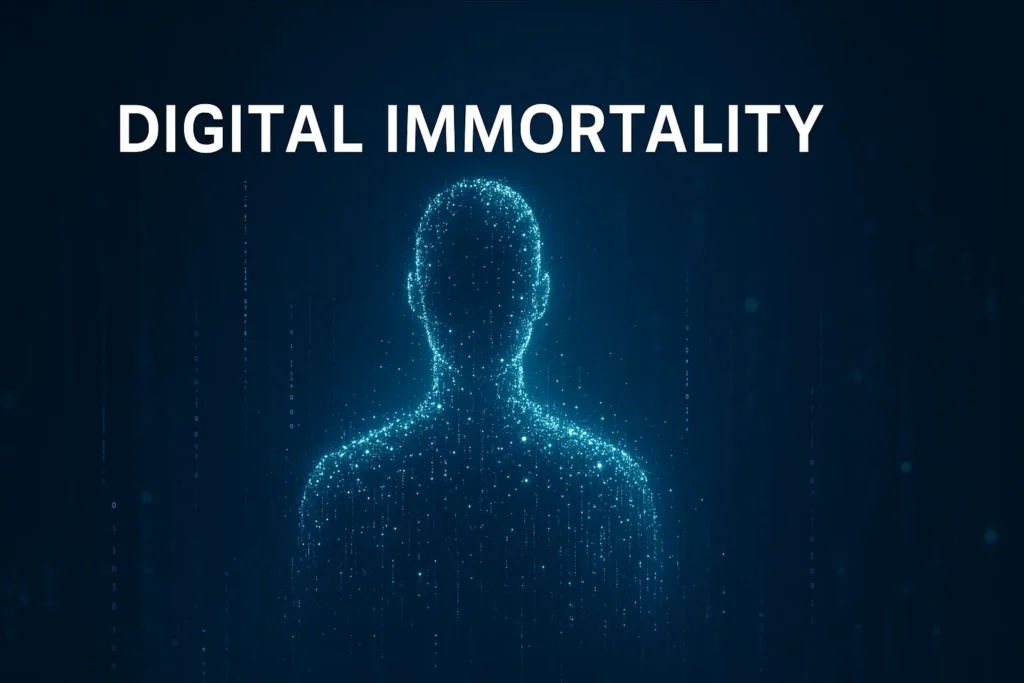
Welcome to digital immortality — the idea that your memories, personality, and knowledge can live on through digital systems long after you’re gone. It sounds futuristic (maybe even a little eerie), but it’s becoming more real every year.
In this post, we’ll break down what digital immortality actually is, how it works, the tools emerging right now, how you can prepare your own “digital legacy,” and common mistakes to avoid.
Let’s dive in.
What Is Digital Immortality? (Simple Explanation)
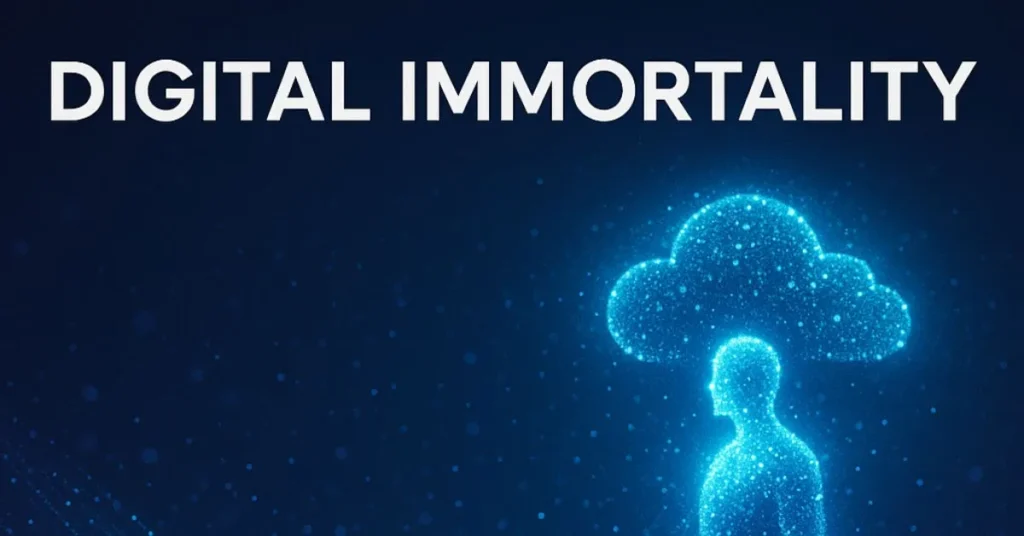
Digital immortality refers to the preservation of a person’s identity — their voice, writing style, stories, preferences, and even personality traits — using digital technology.
The goal: allow future generations (or even AI) to interact with a version of you.
Think of it as a dynamic, interactive legacy, not just a scrapbook or stored photos.
Examples of Digital Immortality in Today’s World
- AI chatbots trained on personal messages or journals
People already create AI versions of themselves using their texts, emails, and writings. - Voice clones for storytelling or answering questions
Loved ones can listen to familiar voices telling old stories. - VR/3D avatars
Digital avatars can mimic gestures and expressions. - AI memorial platforms
Tools like HereAfter AI or Replika allow users to preserve memories through Q&A-style recording.
We’re not talking science fiction — the groundwork is already here.
Why People Are Deeply Interested in Digital Immortality
1. Preserving family history
Imagine future generations being able to ask your digital avatar what life was like in 2024.
2. Emotional comfort
For many, it offers a way to cope with loss and maintain connection.
3. Sharing knowledge long-term
Think of experts, teachers, or creators leaving behind “living libraries” of themselves.
4. Identity expression
Some people simply enjoy building a digital self that evolves over time.
How Digital Immortality Works (Without Tech Jargon)
You don’t need to be an engineer to understand the basics. Digital immortality typically includes three components:
1. Data Collection
Everything that represents your personality:
- Voice recordings
- Photos and videos
- Text messages, journals, social media posts
- Interviews about your memories and beliefs
2. Data Modeling
AI analyzes your patterns:
- How you talk
- How you respond emotionally
- Your humor, preferences, expressions
- Your storytelling style
3. Digital Representation
Your “digital self” is built in a form such as:
- A chatbot
- A narrated avatar
- A conversational AI
- A hologram or VR figure
Some models can even continue learning based on the data you leave behind.
How to Start Creating Your Own Digital Legacy (Step-by-Step Guide)
Even if full digital immortality sounds far-off, you can start small today.
Step 1: Collect Your Stories Consistently
Record short voice notes about:
- Childhood memories
- Lessons learned
- Funny family stories
- Your opinions on big life topics
Tip: Use apps like Notion, Day One, or even the voice recorder on your phone.
Step 2: Organize Your Digital Assets
Make sure your content won’t get lost:
- Back up photos and videos
- Save important messages or journals
- Label folders clearly (“Family Stories,” “Career Lessons,” etc.)
Step 3: Choose a Digital Legacy Tool
These platforms help preserve your personality:
- HereAfter AI – Interviews you and creates an interactive “digital presence.”
- StoryWorth – Weekly emailed prompts turned into a book.
- Replika – A conversational AI that adapts to your personality over time.
- Project December – Experimental conversational persona builder.
Pick based on your comfort level — you don’t need the most advanced option to get started.
Step 4: Build and Train Your Digital Persona
This can include:
- Uploading voice notes
- Answering guided questions
- Feeding the AI with samples of how you speak
- Recording video diaries
The more authentic your content, the better the digital version of you.
Let loved ones know where your digital materials are stored and how you want them used.
This step brings meaning to all the effort you put in.
Common Mistakes to Avoid
❌ Mistake 1: Waiting too long to start
Memories fade. Record your stories now — even casually.
❌ Mistake 2: Overediting your digital persona
People want the real you — quirks, jokes, imperfections included.
❌ Mistake 3: Storing everything in one place
Backups matter. Use both cloud storage and offline drives.
❌ Mistake 4: Ignoring privacy settings
Always review what platforms do with your data.
Real-World Use Cases
1. Family Memorials
One family created an AI version of their father using years of voice messages, allowing grandkids to hear stories they never got to hear in person.
2. Creative Careers
Authors and experts use AI-trained models to continue teaching or coaching after retirement.
3. Medical Support
Early dementia patients record memories and instructions to help loved ones later.
4. Digital Companionship
Some people create a digital “friend version” of themselves to help loved ones feel supported when they’re traveling or unavailable.
Digital Immortality vs. Traditional Preservation
| Method | Static or Interactive? | Level of Personalization | Longevity |
|---|---|---|---|
| Photo albums | Static | Low | High |
| Journals | Static | Medium | High |
| Videos | Semi-interactive | Medium | High |
| Digital avatars/AI models | Fully interactive | Very high | Unlimited (with updates) |
Digital immortality isn’t replacing older methods — it’s expanding our options.
Final Takeaway
Digital immortality isn’t about living forever — it’s about leaving something meaningful behind.
A digital legacy gives your future family not just your words, but your voice, your personality, and your stories in your own style.
You don’t need advanced tools. You just need to start capturing your life, one story at a time.
FAQs
Is digital immortality safe?
Mostly, yes — but always check how platforms handle privacy, ownership, and data usage.
Do I need tech skills?
Not at all. Many tools are designed for beginners and offer step-by-step prompts.
Can digital avatars learn after I’m gone?
Some can evolve based on stored data, though capabilities vary by platform.
Is this expensive?
Many tools are free or low-cost. More advanced options may charge subscription fees.

Adrian Cole is a technology researcher and AI content specialist with more than seven years of experience studying automation, machine learning models, and digital innovation. He has worked with multiple tech startups as a consultant, helping them adopt smarter tools and build data-driven systems. Adrian writes simple, clear, and practical explanations of complex tech topics so readers can easily understand the future of AI.