

Deciding to get dental braces is a significant step towards achieving a healthier, more confident smile. For many, the journey to perfectly aligned teeth is filled with questions about types, costs, comfort, and care. Understanding the process can make the experience much smoother and more rewarding. This guide is designed to provide clear, comprehensive answers, whether you’re considering braces for yourself as an adult or for your teen.
We will explore the various types of orthodontic treatment available today, from traditional metal braces to discreet clear aligners. We’ll also break down the factors that influence cost, discuss what to expect during treatment, and offer practical tips for maintaining your oral health. Let’s begin this journey to a straighter smile together.
Why Consider Dental Braces? More Than Just a Pretty Smile
While a perfectly aligned smile is a major benefit, the reasons for getting dental braces extend far beyond aesthetics. Orthodontic treatment addresses a range of dental health issues that can have long-term consequences if left untreated. Straightening teeth is fundamentally about improving function and promoting overall health.
Key Health Benefits of Orthodontic Treatment
- Improved Oral Hygiene: Crowded or crooked teeth are difficult to clean effectively. This can lead to a buildup of plaque and tartar, increasing the risk of cavities and gum disease. Straight teeth are easier to brush and floss, promoting better gum health.
- Correction of Bite Issues: Malocclusions, or “bad bites,” can cause significant problems. Common bite issues include:
- Overbite: The upper front teeth excessively overlap the lower front teeth.
- Underbite: The lower front teeth sit in front of the upper front teeth.
- Crossbite: Some upper teeth sit inside the lower teeth.
- Open Bite: The front teeth don’t meet when the mouth is closed.
These issues can lead to jaw pain, difficulty chewing, and uneven wear on tooth enamel.
- Reduced Risk of Tooth Injury: Protruding front teeth are more susceptible to chipping or breaking, especially during accidents or sports. Braces can move these teeth into a more protected position.
- Alleviation of Jaw Pain and Headaches: Misaligned teeth can put excess stress on the jaw muscles and the temporomandibular joint (TMJ). This strain can result in chronic headaches, earaches, and facial pain. Correcting the bite can often relieve these symptoms.
- Enhanced Self-Esteem: The psychological impact of a smile you love cannot be overstated. Feeling confident in your appearance can positively affect social interactions, professional opportunities, and overall mental well-being.
What’s the Right Age for Dental Braces?

There is a common misconception that braces are just for teenagers. While adolescence is a popular time for orthodontic work, treatment can be successful at almost any age. The American Association of Orthodontists recommends a child’s first orthodontic screening by age seven.
Braces for Children and Teens
Early evaluation allows an orthodontist to identify and address developing issues before they become more serious. This is known as interceptive orthodontics. For most kids, comprehensive treatment begins between the ages of 9 and 14, when most of their permanent teeth have come in. During these years, the jaw is still growing, which can make it easier to guide teeth into their correct positions.
Adult Orthodontics
It is never too late to improve your smile. A growing number of adults are choosing to get dental braces to correct issues they’ve had since childhood or problems that have developed over time. Adult orthodontic treatment can be just as effective, though it may sometimes take slightly longer because the jaw bones are no longer growing. The availability of discreet options like ceramic braces and clear aligners has made treatment more appealing for adults in professional settings.
Exploring the Different Types of Dental Braces
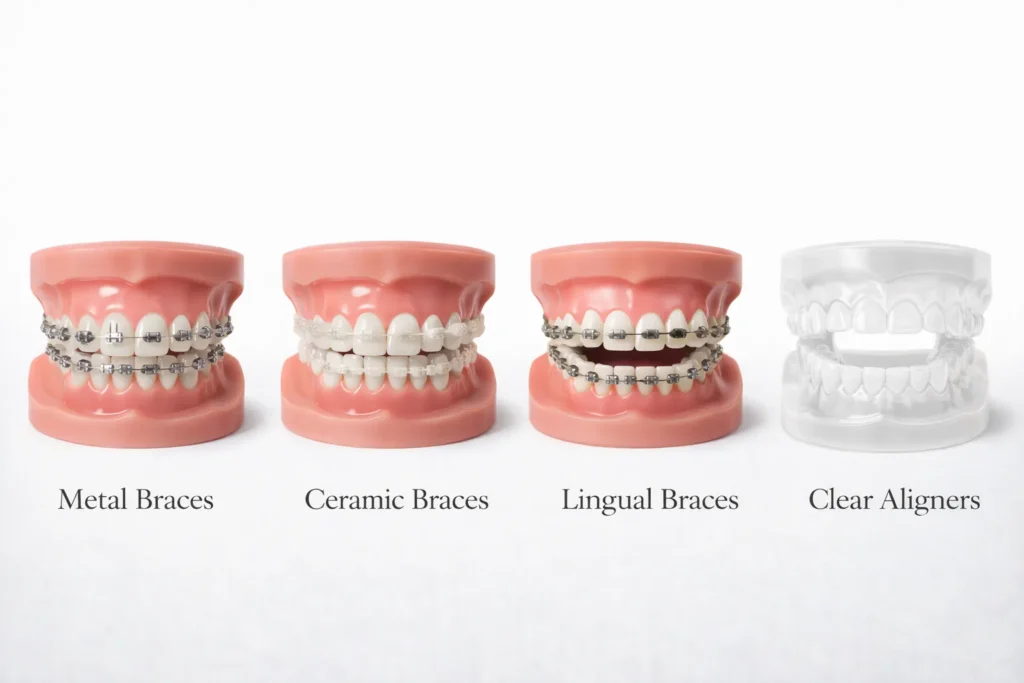
Orthodontic technology has evolved significantly. Today, patients have several options to choose from, each with its own set of advantages. The best choice depends on your specific orthodontic needs, lifestyle, and budget.
Traditional Metal Braces
This is the most common and recognizable type of dental braces. Modern metal braces are smaller, more comfortable, and more efficient than ever before.
- How They Work: They consist of high-grade stainless steel brackets that are glued to the front of each tooth and connected by a thin archwire. Small elastic bands, or ligatures, hold the wire to the brackets. The orthodontist periodically tightens the wire to gradually shift the teeth into alignment.
- Pros: Highly effective for complex cases, durable, and often the most affordable option. Kids and teens enjoy choosing different colored bands at each appointment.
- Cons: They are the most noticeable type of braces.
Ceramic Braces
Ceramic braces function in the same way as metal braces but are designed to be less conspicuous.
- How They Work: The brackets are made from a clear or tooth-colored ceramic material, allowing them to blend in with your natural teeth. Some even use tooth-colored wires to be even more discreet.
- Pros: Much less visible than metal braces, offering an aesthetic advantage. They are just as effective at moving teeth.
- Cons: They are typically more expensive than metal braces and can be slightly less durable. The clear elastic ties can stain, but they are changed at every adjustment appointment.
Lingual Braces
Lingual braces are the ultimate in discretion because they are completely hidden from view.
- How They Work: They are custom-made and cemented to the back (lingual side) of your teeth. Like traditional braces, they use brackets and wires to move teeth into position.
- Pros: Completely invisible from the outside, making them a popular choice for adults, actors, and athletes.
- Cons: They are one of the most expensive options due to customization. They can be more difficult to clean and may cause initial tongue irritation and a temporary lisp.
Self-Ligating Braces
Self-ligating braces look similar to traditional metal or ceramic braces but use a different method to hold the archwire.
- How They Work: Instead of elastic bands, these braces use a special clip or door mechanism built into the bracket to hold the wire. This system may reduce friction, potentially allowing for more efficient tooth movement.
- Pros: May require fewer adjustment appointments and can be easier to clean around the brackets since there are no elastic ties to trap food.
- Cons: They can be more expensive than traditional braces.
Clear Aligners (e.g., Invisalign)
Clear aligners are a popular braces alternative that forgoes brackets and wires altogether.
- How They Work: This system uses a series of custom-made, clear plastic trays that fit snugly over your teeth. Each tray is worn for about 1-2 weeks before moving to the next one in the series, gradually shifting your teeth. The aligners must be worn for 20-22 hours a day.
- Pros: Virtually invisible, removable for eating and cleaning, and generally more comfortable than traditional braces as there are no metal parts to irritate the mouth.
- Cons: Requires strong patient discipline to wear them as prescribed. They are not suitable for all complex orthodontic cases and are often more expensive than metal braces.
The Orthodontic Journey: What to Expect
The process of getting and living with dental braces can be broken down into several key stages.
1. The Initial Consultation
Your journey begins with a consultation with an orthodontist. During this visit, the orthodontist will:
- Perform a thorough examination of your teeth, jaw, and bite.
- Take X-rays, photos, and digital scans or impressions of your teeth.
- Discuss your orthodontic issues and treatment goals.
- Recommend a treatment plan, including the type of braces best suited for you, the estimated duration, and the total cost.
2. Getting Your Braces On (Bonding)
The appointment to get your braces placed is usually painless and takes about 1-2 hours. The orthodontist will clean and prepare your teeth, then use a special adhesive to bond the brackets to each tooth. Finally, the archwire and elastic bands are placed. For clear aligners, this appointment involves receiving your first few sets of trays and ensuring they fit correctly. Small, tooth-colored “attachments” may also be bonded to some teeth to help the aligners grip and move them effectively.
3. Adjustments and Monitoring
You will visit your orthodontist every 4-8 weeks for adjustments. During these appointments, the orthodontist will check your progress and make changes to guide the teeth.
- For traditional braces: This usually involves changing the elastic ties and possibly tightening or replacing the archwire.
- For clear aligners: You’ll receive your next sets of trays, and the orthodontist will ensure your teeth are “tracking” correctly with the aligner movements.
You may experience some mild soreness or discomfort for a few days after each adjustment as your teeth begin to move.
4. Life with Braces: Diet and Oral Hygiene
Maintaining excellent oral hygiene is crucial during orthodontic treatment.
- Dietary Changes: You’ll need to avoid hard, sticky, and chewy foods that can damage your braces. This includes things like hard candies, nuts, popcorn, and chewing gum. Cut hard fruits and vegetables like apples and carrots into small pieces.
- Brushing and Flossing: Brushing after every meal is ideal. You’ll need to learn a new technique to clean carefully around the brackets and wires. Special tools like interdental brushes, floss threaders, or a water flosser can make cleaning much easier.
- Regular Dental Checkups: Continue to see your general dentist for regular checkups and cleanings every six months.
5. Getting Your Braces Off (Debonding)
This is the exciting day you’ve been waiting for! The orthodontist will remove your braces, which is a quick and painless process. They will then clean off any remaining adhesive and polish your teeth.
6. The Retention Phase
Your orthodontic journey isn’t over when the braces come off. The retention phase is critical for maintaining your new smile. Your teeth have a natural tendency to shift back to their old positions. To prevent this, you will be fitted for a retainer.
- Types of Retainers:
- Hawley Retainer: A removable retainer made of plastic and a metal wire.
- Clear Retainer: A removable, transparent tray similar to a clear aligner.
- Fixed Retainer: A thin wire permanently bonded to the back of your front teeth.
- Wearing Your Retainer: Your orthodontist will give you specific instructions. Typically, you’ll need to wear your removable retainer full-time for the first few months, then switch to wearing it only at night. This is a lifelong commitment to keep your smile straight.
Understanding the Cost of Dental Braces
The cost of orthodontic treatment can vary widely depending on several factors:
- Type of Braces: Metal braces are generally the most affordable, while lingual braces and clear aligners are at the higher end.
- Complexity of the Case: More severe alignment or bite issues require longer and more intensive treatment, which increases the cost.
- Geographic Location: Costs can differ significantly between urban and rural areas.
- Insurance Coverage: Many dental insurance plans offer some level of orthodontic coverage, but the amount varies.
Most orthodontic offices offer flexible payment plans and financing options to make treatment more affordable. Be sure to discuss all costs and payment options during your initial consultation.
Conclusion: An Investment in a Lifetime of Health and Confidence
Choosing to get dental braces is a powerful investment in your long-term health and self-esteem. While the process requires commitment, the rewards of a healthy, functional, and beautiful smile are immeasurable. With modern orthodontic options, treatment is more comfortable, efficient, and discreet than ever before, making it a viable choice for both adults and teens.
If you are considering orthodontic treatment, the first step is to schedule a consultation with a qualified orthodontist. They can provide a professional evaluation and create a personalized plan to help you achieve the smile you’ve always wanted. Your journey to a straighter, healthier smile is a collaborative effort, and with the right care and guidance, the results will last a lifetime.
Frequently Asked Questions (FAQs)
Q1: Do dental braces hurt?
A: You can expect some mild soreness and discomfort for a few days after your braces are first put on and after each adjustment. Your teeth and mouth may feel tender. This is normal and can be managed with over-the-counter pain relievers. The orthodontist can also provide wax to cover any brackets that irritate your cheeks or lips.
Q2: How long does orthodontic treatment take?
A: The average treatment time is between 18 and 24 months, but it can range from as little as 6 months to over 3 years. The duration depends on the severity of your case, the type of braces you choose, and your adherence to the orthodontist’s instructions.
Q3: Can I play sports with braces?
A: Yes, you can continue to play sports while wearing braces. It is highly recommended to wear a protective orthodontic mouthguard to prevent injuries to your mouth and damage to your braces.
Q4: How much do dental braces cost?
A: The cost varies greatly but can range from $3,000 for simple cases to $10,000 or more for complex treatments with specialized braces like lingual braces. Your orthodontist will provide a precise quote during your consultation. Many offices offer payment plans to help manage the cost.
Q5: What is the difference between a dentist and an orthodontist?
A: Both are doctors of dental medicine, but an orthodontist is a specialist who has completed an additional 2-3 years of advanced education and training in orthodontics. While some general dentists offer basic orthodontic services, an orthodontist has specialized expertise in diagnosing, preventing, and treating dental and facial irregularities to correctly align teeth and jaws.

Sofia Bennett is a fashion writer and style observer known for her clean sense of aesthetics and trend analysis. She has covered fashion shows, reviewed designer collections, and interviewed independent creators. Sofia specializes in connecting fashion with real-life lifestyle choices, helping readers understand what looks good — and why.