

If you have ever stood in a clothing store wondering who actually decides what trends hit the shelves—or scrolled through a luxury brand’s website thinking, “How does someone land a job doing this?”—you are already circling the reason the Fashion Institute of Technology exists. Fashion today is no longer just about aesthetics. It is a $2+ trillion global industry shaped by data, sustainability pressures, fast-moving digital culture, and razor-thin margins. Brands are desperate for professionals who understand both creativity and commerce.
This article is written for aspiring designers, fashion marketers, merchandisers, textile innovators, parents researching serious career paths, and even professionals considering a strategic pivot into fashion. It solves real problems: choosing the right fashion school, understanding whether FIT is “worth it,” and knowing what outcomes actually look like after graduation—not just in glossy brochures.
By the end, you’ll understand how FIT operates in the real world, who benefits most from it, how to get in, what mistakes to avoid, and how to extract maximum value from one of the most respected fashion institutions on the planet.
Fashion Institute of Technology Explained: From Beginner Curiosity to Industry-Level Understanding
The Fashion Institute of Technology, commonly known as FIT, is a public college based in New York City that specializes in fashion, design, business, technology, and the creative industries. Unlike many private fashion schools that focus heavily on conceptual design, FIT was built from the start to serve industry needs. Think of it less as an art academy and more as a professional training ground embedded directly into the fashion capital of the U.S.
At a beginner level, FIT might look like “a fashion school in New York.” At an expert level, it’s more accurate to describe it as a talent pipeline feeding global brands like Nike, Ralph Lauren, LVMH-owned labels, and major retail groups. FIT offers associate, bachelor’s, and master’s degrees, with programs ranging from Fashion Design and Textile Development to Fashion Business Management, Advertising, and Cosmetics & Fragrance Marketing.
What makes FIT different is its balance. Creativity is not treated as isolated genius; it is taught alongside supply chains, consumer psychology, sustainability frameworks, and digital merchandising. This mirrors how fashion actually works in the real world. A brilliant design that cannot be produced profitably or marketed effectively doesn’t survive long.
The Strategic Advantage of Studying at the Fashion Institute of Technology
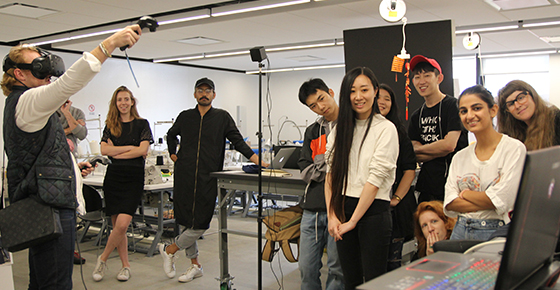
One of FIT’s biggest strengths is location. Being based in Manhattan means students are not learning fashion in theory—they are living inside the industry. Internships are not abstract future goals; they are often part-time jobs during the semester. Guest lectures come from professionals who are actively shaping the market.
From a benefits perspective, FIT serves three major groups exceptionally well:
First, students who want employability. FIT’s curriculum is famously practical. Graduates leave with portfolios, real projects, and industry contacts—not just conceptual ideas.
Second, career switchers. FIT attracts professionals from marketing, retail, tech, and even finance who want structured entry into fashion without starting from zero.
Third, budget-conscious families. As a public institution, FIT is significantly more affordable than private fashion schools, while often delivering equal—or better—industry outcomes.
The “before vs after” difference is striking. Before FIT, many students have passion but no direction. After FIT, they have a specialization, a professional network, and a realistic understanding of where they fit in the fashion ecosystem.
Academic Programs at the Fashion Institute of Technology: What You Can Actually Study
FIT’s academic structure is intentionally broad yet deeply specialized. At the associate level, programs focus on technical foundations—patternmaking, textiles, visual merchandising, or basic business analytics. Bachelor’s degrees push students into strategic thinking, leadership, and specialization. Master’s programs are designed for high-level roles and research-driven innovation.
Design-focused students gravitate toward Fashion Design, Textile Development, and Illustration. Business-minded students often choose Fashion Business Management, International Trade and Marketing, or Advertising & Digital Design. Technology-forward programs like Technical Design and Production Management are increasingly in demand as brands digitize their workflows.
What many people miss is how interconnected these programs are. A designer collaborates with a merchandiser. A marketer works with a production manager. This mirrors real fashion companies, where silos kill efficiency. FIT trains students to speak multiple “industry languages,” which is a major employability advantage.
Admissions at the Fashion Institute of Technology: What Really Gets You Accepted
Admissions at FIT are competitive, but not mysterious. Portfolios matter for design programs, while academic performance and personal statements weigh more heavily for business and technology tracks. What admissions officers look for is not perfection, but clarity. They want to see that you understand what you are signing up for.
A common misconception is that only “naturally talented” artists get in. In reality, FIT values growth potential, work ethic, and alignment with program goals. A focused, well-explained portfolio often outperforms a scattered but technically impressive one.
Pro tip: FIT appreciates applicants who understand the commercial side of fashion. Even design applicants benefit from showing awareness of market trends, target consumers, and production realities.
Step-by-Step: How to Get the Most Out of the Fashion Institute of Technology
Success at FIT is not automatic. Students who thrive tend to follow a deliberate strategy.
Step one is choosing the right program—not the most glamorous one. Many high-paying fashion roles are behind the scenes: production, sourcing, data-driven merchandising.
Step two is treating New York City as an extension of campus. Internships, retail jobs, showroom visits, and industry events are where real learning happens.
Step three is building relationships with professors. Many are active professionals whose recommendations carry real weight.
Step four is documenting everything. Portfolios, case studies, and process documentation matter more than grades once you enter the job market.
Step five is staying adaptable. Fashion changes fast. FIT rewards students who evolve with it rather than clinging to a single aesthetic or role.
Tools, Resources, and Expert Recommendations for FIT Students
FIT students gain access to industry-standard tools: Adobe Creative Cloud, patternmaking software, merchandising analytics platforms, and professional-grade studios. But tools alone don’t guarantee success.
Free tools like trend reports from public fashion publications are great for beginners. Paid tools—such as advanced forecasting platforms—become useful at higher levels. The key is knowing when to upgrade.
Expert recommendation: focus less on owning every tool and more on mastering workflows. Employers care more about how you think than which software you touched onceCommon Mistakes FIT Students Make—and How to Avoid Them
One frequent mistake is over-romanticizing fashion. This leads to burnout when students realize how demanding the industry is. The fix is simple: treat fashion as a business that happens to be creative.
Another mistake is ignoring business fundamentals. Even designers benefit from understanding margins, sourcing, and timelines.
A third mistake is staying inside the FIT bubble. Students who only interact with classmates miss the broader industry context. Real-world exposure is non-negotiable.
Finally, many students wait too long to build portfolios. The best time to start is day one—not senior year.
Fashion Institute of Technology and Career Outcomes: What Happens After Graduation
FIT alumni work across the fashion spectrum: luxury houses, fast-fashion giants, tech-enabled retail startups, and independent labels. Roles include designers, buyers, production managers, brand strategists, and digital marketers.
What stands out is adaptability. FIT graduates tend to pivot well because they understand systems, not just tasks. In an industry where layoffs and reinvention are common, this resilience is invaluable.
The Fashion Institute of Technology in a Changing Industry Landscape
Fashion is facing massive shifts: sustainability mandates, AI-driven design tools, and supply chain transparency demands. FIT has responded by integrating sustainability, ethics, and technology into its curriculum.
Students today are not just trained to follow trends but to question them. This mindset is increasingly important as consumers demand accountability from brands.

Conclusion: Is the Fashion Institute of Technology Worth It?
For students who want a serious, career-focused education in fashion, the Fashion Institute of Technology remains one of the strongest options globally. It is not the easiest path, nor the most glamorous. But it is one of the most honest.
If you are willing to work, adapt, and engage with fashion as both art and industry, FIT offers a platform that few institutions can match. The value is not just in the degree—it is in the mindset, network, and real-world readiness you build along the way.
FAQs
Is the Fashion Institute of Technology a good school for fashion careers?
Yes. FIT is widely respected for producing job-ready graduates across design, business, and technology roles.
Is FIT better than private fashion schools?
In terms of cost-to-outcome ratio and industry integration, many professionals consider FIT superior.
Do you need to be artistic to attend FIT?
Not necessarily. Business, marketing, and technology programs do not require advanced artistic skills.
How competitive is admission to FIT?
Moderately competitive. Clear goals and strong portfolios or academic records significantly improve chances.
Can international students attend FIT?
Yes. FIT attracts students from around the world and offers support services for international applicants.

Adrian Cole is a technology researcher and AI content specialist with more than seven years of experience studying automation, machine learning models, and digital innovation. He has worked with multiple tech startups as a consultant, helping them adopt smarter tools and build data-driven systems. Adrian writes simple, clear, and practical explanations of complex tech topics so readers can easily understand the future of AI.