
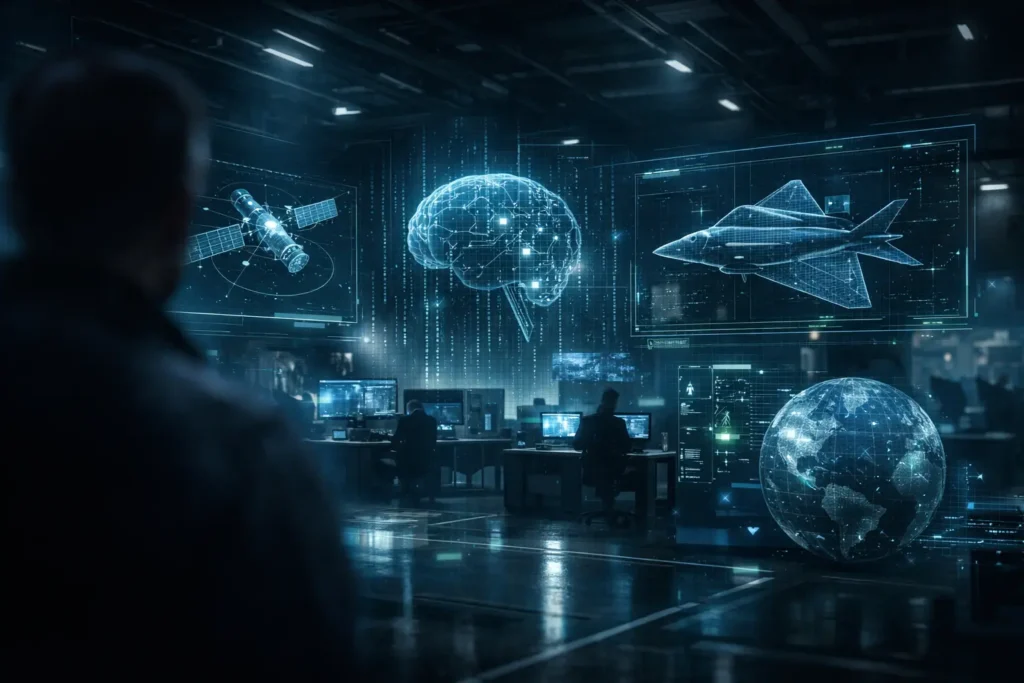
What if some of the most advanced technologies on Earth already exist—but you’ll never see them on a product launch stage, read about them in press releases, or download them from an app store?
That’s the reality of classified technologies.
Behind closed doors, inside secured facilities, and under layers of legal protection, governments and defense organizations are developing technologies that are often decades ahead of what the public knows. These systems influence global power, national security, and even the consumer tech we eventually take for granted—long before anyone outside a clearance circle hears a word about them.
This topic matters more than most people realize. Classified technologies don’t just shape military outcomes; they quietly drive breakthroughs in aerospace, cybersecurity, AI, communications, materials science, and medicine. GPS, the internet, and voice recognition all began as classified or restricted programs. Understanding how this ecosystem works helps you better grasp where innovation truly comes from, why secrecy exists, and how ideas transition from “black projects” to everyday life.
In this guide, you’ll learn what classified technologies really are, how they’re developed, where they’re used, the benefits and risks involved, common misconceptions, and how professionals actually work within this highly restricted environment. Whether you’re a tech enthusiast, researcher, policymaker, or just deeply curious, this article pulls back the curtain—without crossing any lines.
Understanding Classified Technologies (A Beginner-Friendly Explanation)

At its core, classified technologies are systems, tools, or knowledge that governments restrict from public access because their exposure could threaten national security, strategic advantage, or public safety.
A simple analogy helps. Imagine a chess game where one player can see five moves ahead because they have access to a special playbook. If the opponent got hold of that book, the advantage disappears. Classified technologies are that playbook—except the stakes involve defense systems, intelligence capabilities, and geopolitical stability.
Classification isn’t about hiding information for drama’s sake. It’s a structured system with defined levels such as Confidential, Secret, and Top Secret. Each level reflects the potential damage that could occur if the information were disclosed. Technologies may be classified because they reveal:
- Military capabilities or vulnerabilities
- Intelligence collection methods
- Advanced cyber or surveillance tools
- Experimental weapons or defense systems
- Strategic research not yet ready for exposure
A key misconception is that classified technologies are always futuristic or exotic. In reality, many are incremental improvements—better encryption algorithms, quieter propulsion systems, more resilient communication networks. What makes them classified is not how flashy they are, but how strategically sensitive they may be.
Another important distinction: classification is not permanent. Many technologies are eventually declassified, downgraded, or partially released once the risk diminishes or newer systems replace them. That’s how once-secret innovations slowly filter into the civilian world.
Benefits and Real-World Use Cases of Classified Technologies
The benefits of classified technologies extend far beyond military dominance. While defense is the most visible use case, the ripple effects reach into nearly every advanced industry.
The most obvious benefit is national security. Classified systems help protect borders, detect threats, and prevent hostile actions before they escalate. Early-warning radar systems, encrypted communications, and cyber defense platforms all fall into this category. Without secrecy, adversaries could simply design around these systems.
Another major benefit is strategic deterrence. Sometimes, the knowledge that a capability exists—even without details—is enough to prevent conflict. This is especially true in areas like missile defense, electronic warfare, and space-based systems. Uncertainty itself becomes a defensive asset.
Classified technologies also act as innovation incubators. Because funding is often substantial and long-term, researchers can pursue ambitious ideas without the pressure of quarterly profits. This environment has produced breakthroughs in:
- Satellite navigation and imaging
- Advanced materials like composites and stealth coatings
- Secure networking and encryption protocols
- Artificial intelligence for pattern recognition
- Medical technologies for trauma care
A powerful real-world scenario is aerospace development. Many modern aircraft features—fly-by-wire controls, advanced avionics, stealth shaping—were perfected in classified programs years before commercial adoption. By the time civilians see a “new” feature, it may already be mature technology.
In short, classified technologies protect, deter, and quietly accelerate progress—often in ways the public only recognizes decades later.
How Classified Technologies Are Developed: A Step-by-Step Look
While details vary by country and agency, the development of classified technologies follows a surprisingly structured process. It’s not chaotic secrecy—it’s controlled innovation.
The process usually begins with capability gaps. Defense planners or intelligence agencies identify a weakness or future threat. This might be an emerging adversary technology, a cybersecurity vulnerability, or a limitation in existing systems.
Next comes concept research and feasibility analysis. Scientists, engineers, and analysts explore whether a solution is even possible. At this stage, many ideas never move forward. Classified programs are expensive, and only viable concepts survive.
Once approved, projects enter restricted development environments. These are secure facilities with controlled access, isolated networks, and strict documentation procedures. Personnel are vetted, cleared, and trained in information handling protocols.
Prototyping follows, often with rapid iteration. Unlike commercial tech, failure here is expected and budgeted for. Lessons learned are documented and fed back into design cycles.
Testing is rigorous and often conducted in controlled or remote environments. Systems may be evaluated for reliability, resilience, and resistance to adversarial exploitation. Only after meeting strict criteria does a technology move toward operational use.
Finally, technologies may be fielded, compartmentalized, or further classified. Some are integrated into existing systems. Others remain isolated, known only to a small group, until strategic conditions change.
The entire process emphasizes traceability, accountability, and risk management—because mistakes at this level have consequences far beyond a product recall.
Tools, Comparisons, and Recommendations in Classified Tech Work
Working with classified technologies requires a specialized toolset—not just hardware and software, but processes and platforms designed for security-first environments.
On the software side, air-gapped systems are common. These computers are physically isolated from public networks to prevent external access. While inconvenient compared to cloud-based tools, they dramatically reduce attack surfaces.
Secure communication platforms are another cornerstone. These systems use government-grade encryption and authentication, often customized for specific agencies. Unlike commercial messaging apps, they prioritize integrity and confidentiality over user convenience.
When comparing free versus paid tools, the distinction is stark. Free or open-source tools are rarely used directly in classified environments without extensive vetting. Paid, custom-built solutions dominate because they offer:
- Verified supply chains
- Dedicated security audits
- Long-term support contracts
- Compliance with government standards
That said, many classified programs adapt commercial tools internally after modification. For example, open-source operating systems may be hardened and stripped of unnecessary components before approval.
Expert recommendation always comes back to one principle: process matters more than tools. Even the most secure software fails if users don’t follow protocols. Training, audits, and oversight are just as critical as technology selection.
Common Mistakes and How to Avoid Them
Despite rigorous controls, mistakes still happen in environments dealing with classified technologies. Most errors are human, not technical.
One frequent mistake is over-classification. While secrecy is essential, classifying too much information slows collaboration, increases costs, and stifles innovation. Smart programs regularly review classification levels and downgrade when appropriate.
Another common issue is complacency. Long-term projects can breed routine, and routine can weaken vigilance. Small lapses—improper document handling, casual conversations, unsecured devices—can have serious consequences.
Poor documentation is another problem. Ironically, secrecy sometimes discourages thorough record-keeping. But without clear documentation, knowledge is lost when personnel rotate out, forcing teams to relearn expensive lessons.
Finally, there’s the mistake of ignoring transition planning. Technologies that remain classified forever may never deliver full value. Programs that plan early for declassification or civilian adaptation often yield far greater long-term benefits.
The fix for most of these issues is cultural, not technical: continuous training, leadership accountability, and a shared understanding of why protocols exist.
Conclusion
Classified technologies sit at the intersection of innovation, security, and responsibility. They are not mysterious for mystery’s sake, nor are they inherently dangerous or unethical. They exist because some knowledge, at certain moments in history, must be protected to preserve stability and safety.
Understanding how classified technologies work—how they’re developed, used, and eventually revealed—gives you a more realistic picture of technological progress. It reminds us that many “overnight breakthroughs” are actually decades in the making, forged quietly under constraints most innovators never face.
As technology continues to evolve faster than policy, the role of classified innovation will only grow more complex. Transparency, oversight, and ethical governance will matter just as much as secrecy itself.
If this topic sparked your curiosity, explore related areas like defense innovation, cybersecurity policy, or the history of declassified breakthroughs—and feel free to share your thoughts or questions.
FAQs
What are classified technologies in simple terms?
Classified technologies are systems or knowledge restricted by governments because public disclosure could harm national security or strategic interests.
No. While many are defense-focused, they also include intelligence, cybersecurity, space systems, and advanced research with civilian applications.
Do classified technologies eventually become public?
Many do. Technologies are often declassified once risks diminish or newer systems replace them.
Can civilians work on classified technologies?
Yes, if they have appropriate security clearances and work for approved organizations or contractors.
How long does information stay classified?
It varies. Some information is declassified within years; other material remains restricted for decades or longer.

Adrian Cole is a technology researcher and AI content specialist with more than seven years of experience studying automation, machine learning models, and digital innovation. He has worked with multiple tech startups as a consultant, helping them adopt smarter tools and build data-driven systems. Adrian writes simple, clear, and practical explanations of complex tech topics so readers can easily understand the future of AI.